Menu
Regrowing the forest, helping both nature and communities to recover; how an idea has become tangible reality.
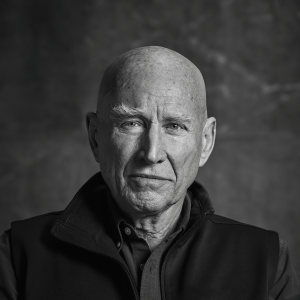
Listen. These are the sounds of a healthy forest: water gushing from springs, flowing to rivers, augmenting the solos of birds splashing and bursting into squawking alarm when a rare jaguar appears out of the undergrowth, and silently vanishes. These forest sounds are the sound of life. Sebastião Salgado and Lélia Wanick Salgado had already lived several lives when in 1998 they decided to reforest a badly degraded family farm in the interior of Brazil, located in the state of Minas Gerais. Almost 30 years earlier, they had fled Brazil’s military dictatorship to study in Paris: economics for Sebastião, architecture for Lélia. To help in her studies, she bought a camera. “Sebastião,” she recalls, “grabbed it, took a photo of me, and on that day the photographer was born.” It was 1971. Abandoning his career as an economist, Sebastião worked as a photojournalist, first for agencies – Sygma, then Gamma, and finally Magnum – until he created Amazonas Images together with Lélia.

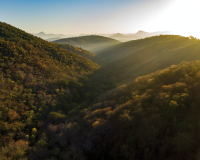
From vision to verdant reality: Instituto Terra breathes new life into the Doce River Basin, one tree at a time. Photo: Leonardo Merçon
Photography changed their lives. Sebastião took on global themes and Lélia designed books and exhibitions as part of these projects. The work demanded extensive travel. Lélia joined many of the trips. The planet became their subject, ranging from northern Africa, to human labor and mass movements of people, or fauna and flora that have survived modern development. Most recently, it includes a stunning celebration of the world’s largest rainforest and its indigenous communities in ‘Amazônia’ – with Zurich as the main global sponsor of the international Amazônia exhibition.
Yet their decision to restore a section of Brazil’s Atlantic Forest, also known as the Mata Atlântica, was arguably the most daring and rewarding initiative they were to take. They founded Instituto Terra, a non-profit organization with the mission of reforesting the Salgado family property in the Rio Doce Valley with native species that had once flourished there. The land became a Private Reserve of Natural Heritage (RPPN), a status similar to a national park. Their early efforts were discouraging. Seedlings died in the depleted soil. With successive attempts, increasing numbers of trees survived. Over 20 years, what the Salgados had begun became a reality: Instituto Terra planted 2.5 million trees. Insects, birds, and mammals – some on the verge of extinction – returned. Locals who once derided the project started to feel its benefits. Springs, perhaps numbering in the thousands, long dormant, began to flow once again.
In 2020, Zurich became a sponsor of Instituto Terra. It was a decisive time. The forest needed to increase density for long-term viability. An additional 100 hectares, beyond the existing 600, had to be reforested. So, the Zurich Forest Project began with a commitment to fund the planting and care of one million native trees. Zurich extended its engagement in 2022, enabling Instituto Terra to nearly triple its area by the end of 2024. Zurich continued to support Instituto Terra in its efforts to restore fragile ecosystems. And, with Zurich’s support, it acquired critical machinery and equipment, and built a new nursery to vastly increase the number of seedlings it produces. First to one million a year, with plans to double that to two million, with a special focus on species resilient to climate stress.
Instituto Terra’s education programs are an important part of its work. Its ‘NERE’ initiative providing technical training for young people is gaining support with the help of Zurich’s charitable institution, the Z Zurich Foundation.
On May 23, 2025, Sebastião Salgado passed away. But the work goes on. Ensuring continuity, Lélia remains on the board, providing consistency of vision, while the Salgados’ eldest son, Juliano, who took a more active role in overseeing its development in 2020, continues to preside over the future of the institution.
By bringing life back to the forest, the forest is giving back of itself, offering value to replenish individual lives and entire communities. With deep care, dedication, and hard work, regrowing the forest is an idea that became tangible reality. A forest once thought of as a liability has become a valuable lifeline.
ZURICH INSURANCE GROUP
Alessio Vinci, Group Chief Communications Officer
Anja Heinsdorf, Project Lead
Published in November 2025
Panda & Pinguin GmbH
Andrea Bleicher
Studio Sturzenegger GmbH
Jürg Sturzenegger
Alice Ratcliffe
Heike Anja Mittmann
group.communications@zurich.com
Zurich Insurance Group
Group Communications
Mythenquai 2
8002 Zurich, Switzerland
This publication has been produced by Zurich Insurance Group Ltd solely for informational purposes. All information contained in this publication have been compiled and obtained from sources believed to be reliable and credible but no representation or warranty, express or implied, is made by Zurich Insurance Group Ltd or any of its subsidiaries as to their accuracy or completeness. No reliance should be placed on any statements contained in this publication. Neither Zurich Insurance Group Ltd nor any of its subsidiaries accept liability for any loss arising from the use or distribution of or reliance upon this publication.
This publication may not be distributed or reproduced either in whole, or in part, without prior written permission of Zurich Insurance Group Ltd, Mythenquai 2, 8002 Zurich, Switzerland.