Menu
Bromeliads, bladderworts and big trees.
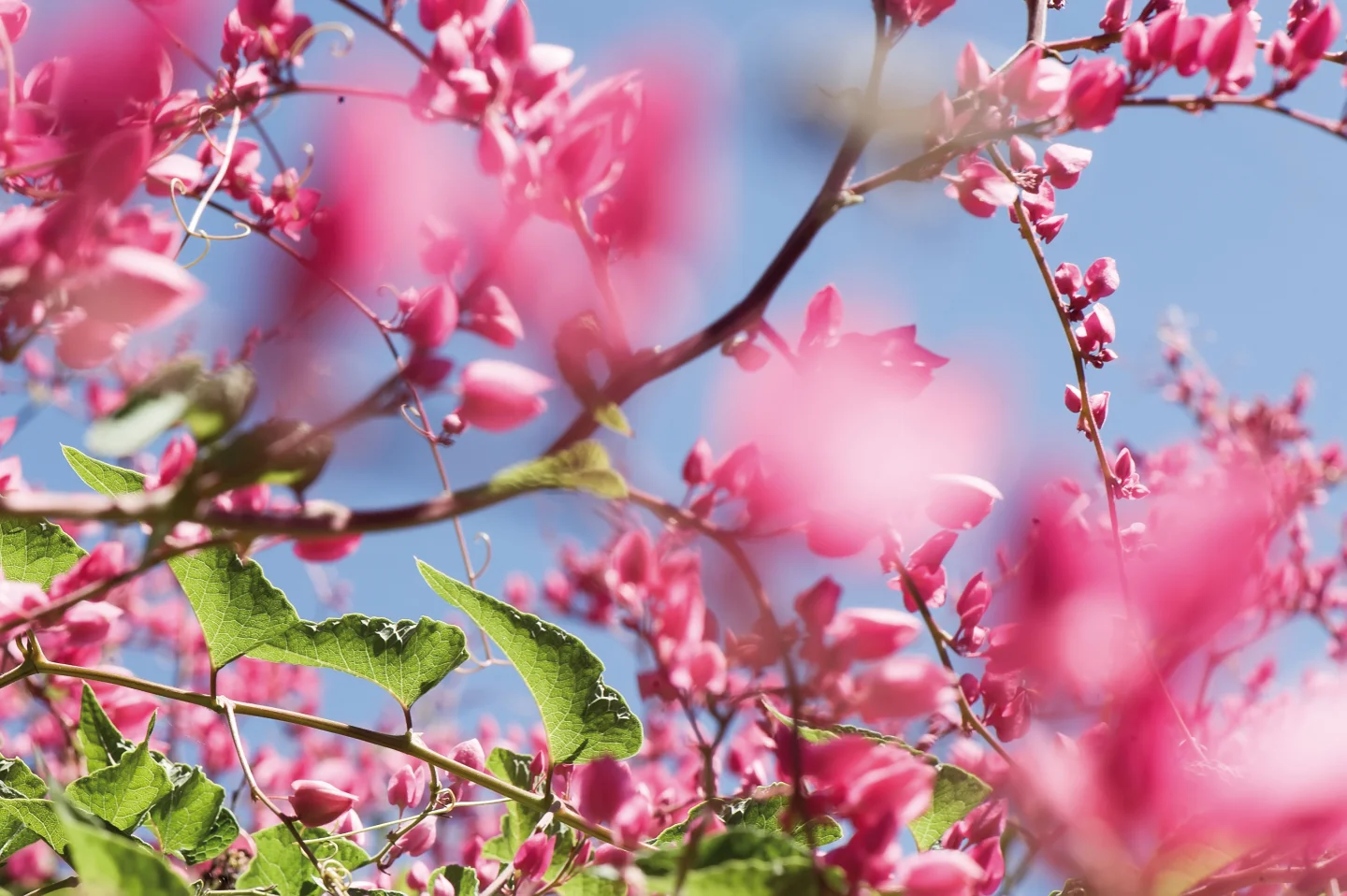
The pink ipê’s vibrant flowers can cover the tree so fully, it looks like a glowing purple cloud. Photo: Leonardo Merçon
While people refer to the Atlantic Forest as a single entity, it comprises many different ecoregions. Despite depredation, the residual Mata Atlântica still harbors a wealth of diversity, from rainforests to ‘restinga’ forests that grow on sandy, salty soil near the coast, to moist forests, arid forests, and savannas. The Atlantic Forest contains around 20,000 plant species, and nearly half are native to the area. It is classed as a biodiversity hotspot, which by definition must contain at least 1,500 plants found nowhere else. The biggest trees include the pink jequitibá (Cariniana legalis), which have long been sought for timber, and are now endangered. If allowed to grow, they rise as high as a 15-story building. Another native, the Pernambuco tree (Paubrasilia echinata) was once exploited for making red dye. Its wood is ideal for violin bows. As another endangered species, an organization has been set up to halt wood purchases for bows until sustainable use can be assured.
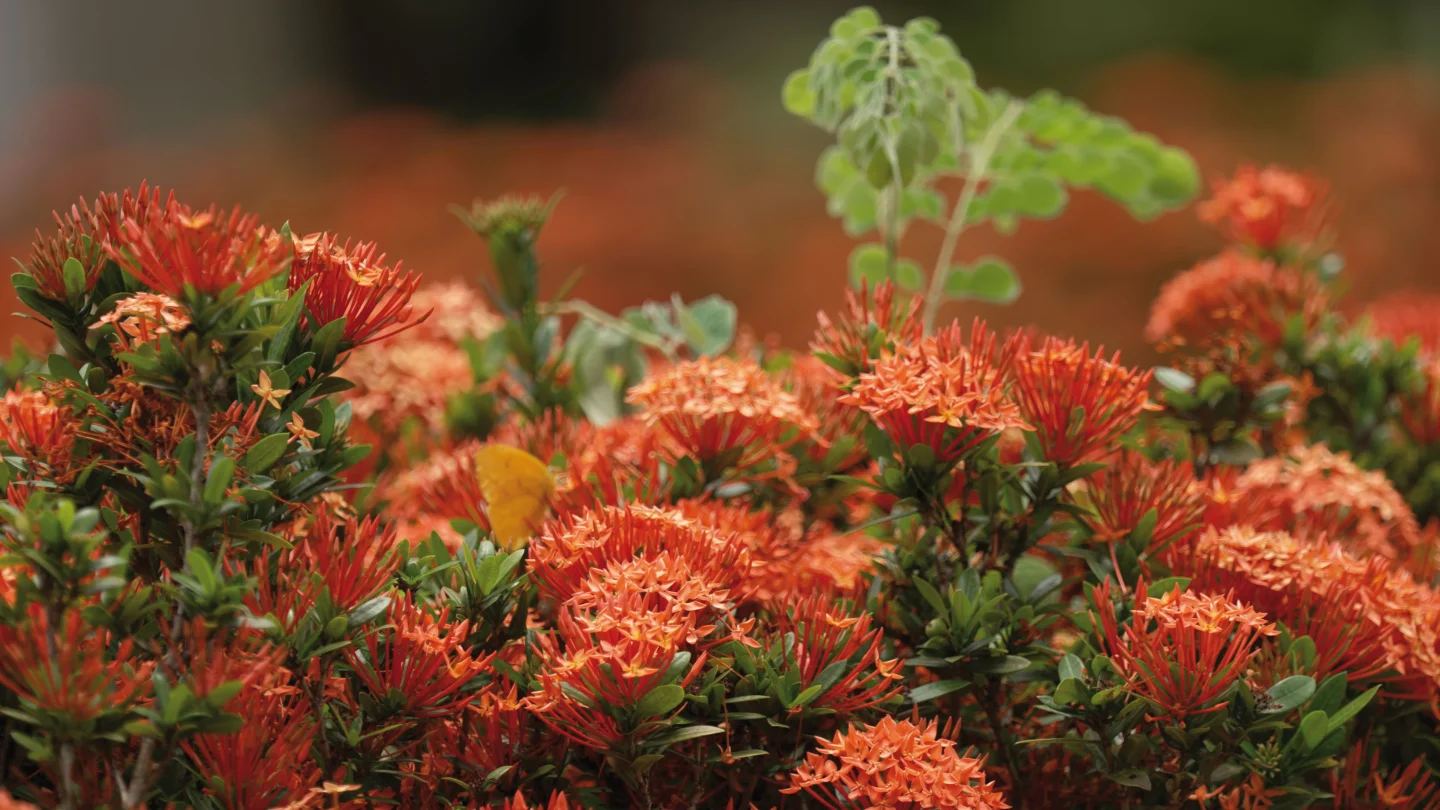
Flame of the woods: Ixora flowers found in the gardens of Instituto Terra. Photo: Leonardo Merçon
Many native plants, once lost, now thrive again in the restored forest. These species were chosen not just for their beauty or resilience, but for their ecological roles.


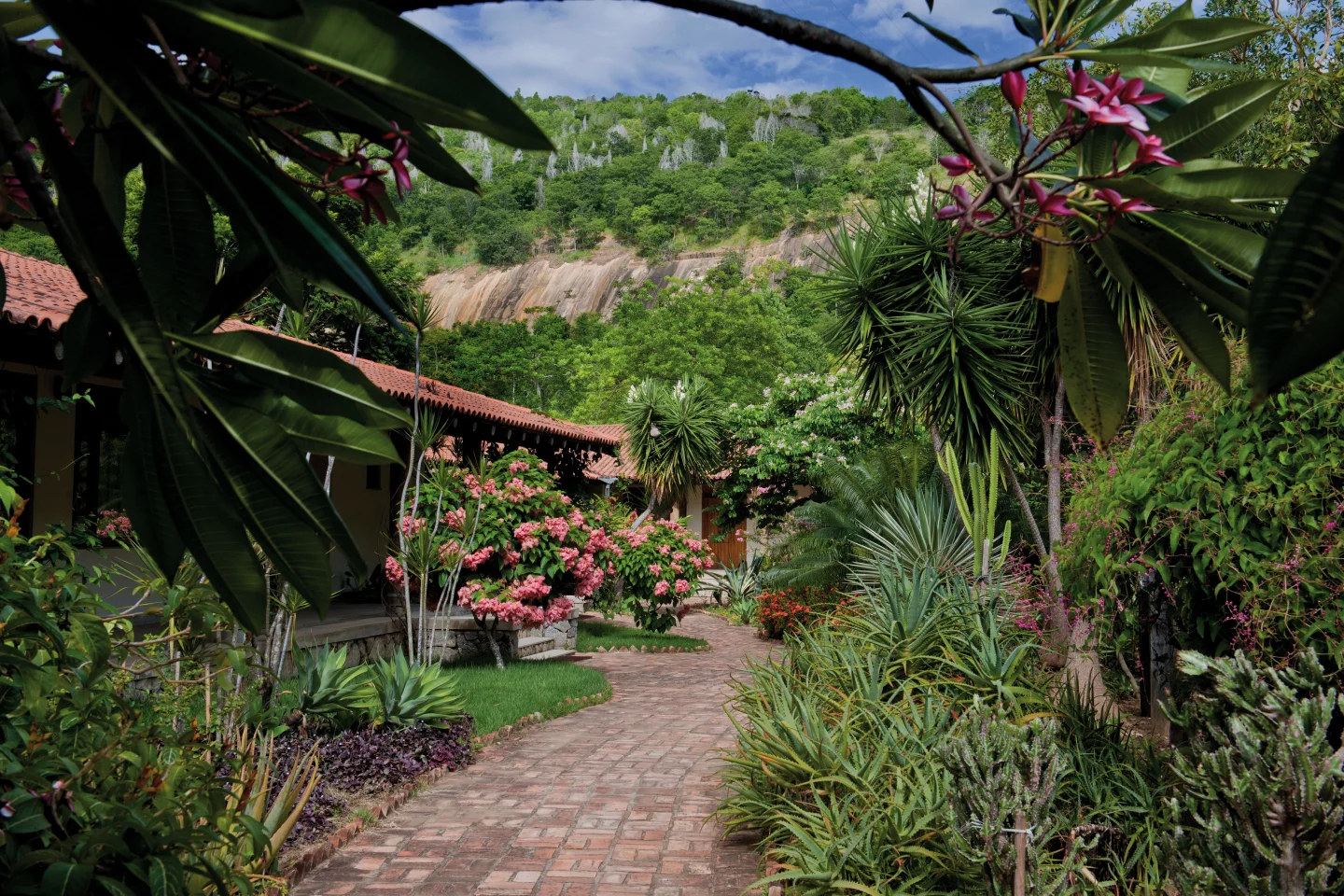
Beauty meets purpose: Native trees restore the soil’s ability to retain water. Photo: Leonardo Merçon
Apart from trees, the Atlantic Forest is also home to a weird and wonderful diversity of flora, from rare orchids to carnivorous bladderworts and bromeliads. Most people are familiar with bromeliads through a single family member – pineapples. The most unusual plant in that category found in the Atlantic Forest is a giant species (Alcantarea imperialis) that takes 40 years to reach maturity. The region is also home to evergreens like the yerba mate (Ilex paraguariensis). A relative of holly, it is used to make tea and energy drinks. But while yerba mate is native to South America, another popular stimulant, coffee, originated in what today is Ethiopia and Yemen. Important for the local economy (Brazil is the world’s largest coffee exporter), thanks to Instituto Terra, local farmers are finding that by replenishing their land with trees, it can recover from abuse and retain enough water to support coffee plants. It shows that given a chance, ecology and economy can flourish side by side.
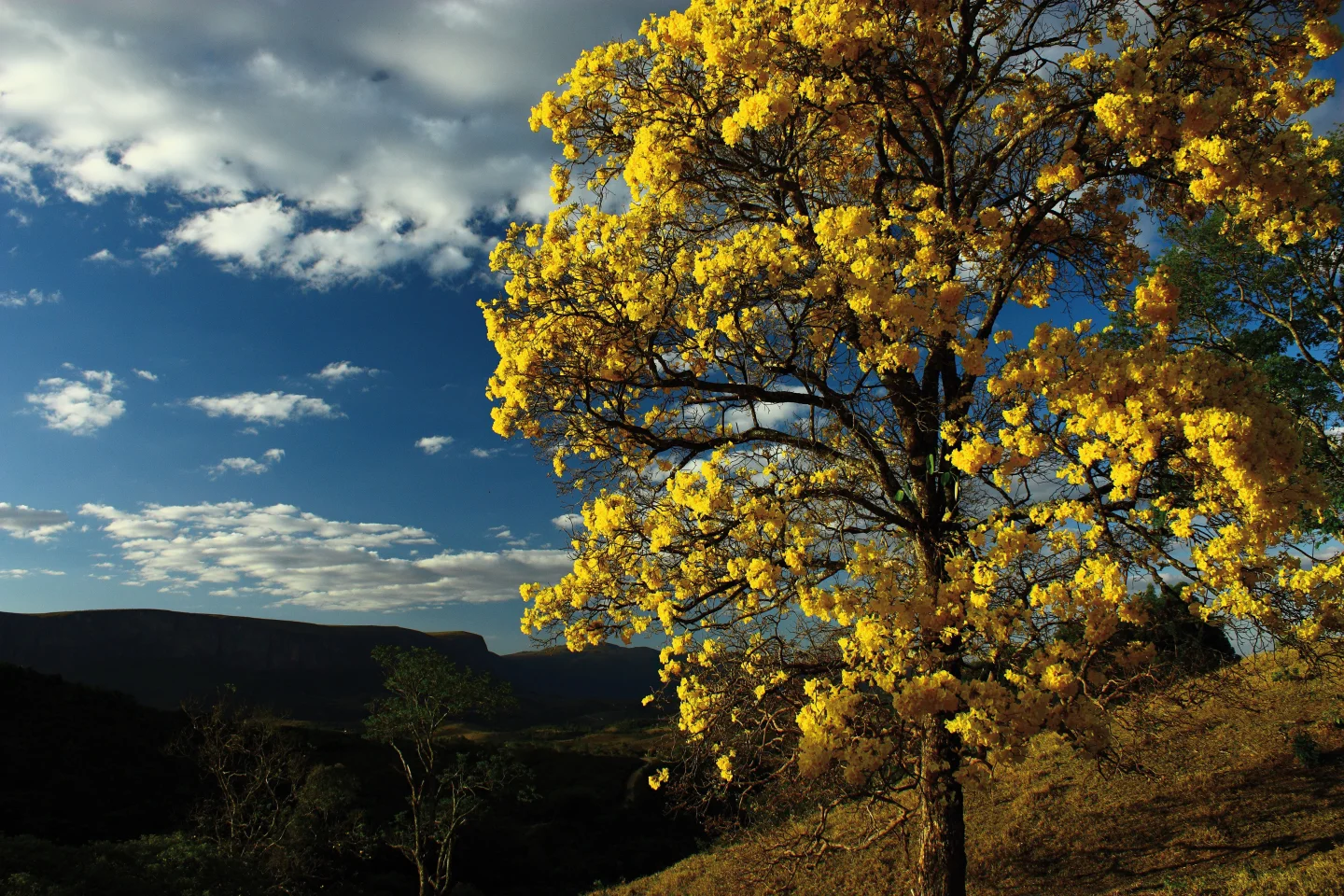
The yellow ipê is one of Brazil’s most iconic and beloved trees. Photo: Leonardo Merçon
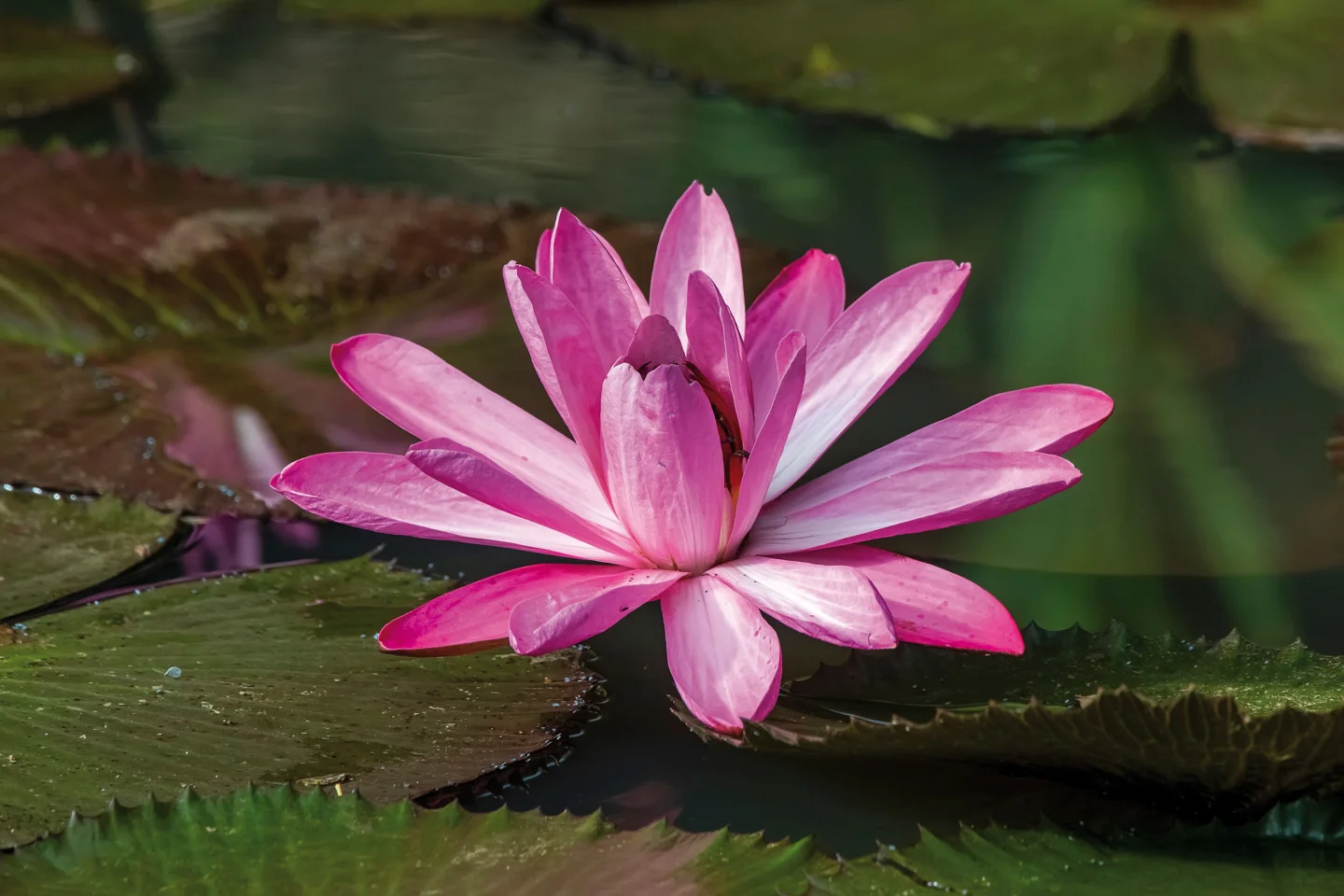
A water lily floats gracefully in the Mata Atlântica’s wetlands. Photo: Leonardo Merçon
ZURICH INSURANCE GROUP
Alessio Vinci, Group Chief Communications Officer
Anja Heinsdorf, Project Lead
Published in November 2025
Panda & Pinguin GmbH
Andrea Bleicher
Studio Sturzenegger GmbH
Jürg Sturzenegger
Alice Ratcliffe
Heike Anja Mittmann
group.communications@zurich.com
Zurich Insurance Group
Group Communications
Mythenquai 2
8002 Zurich, Switzerland
This publication has been produced by Zurich Insurance Group Ltd solely for informational purposes. All information contained in this publication have been compiled and obtained from sources believed to be reliable and credible but no representation or warranty, express or implied, is made by Zurich Insurance Group Ltd or any of its subsidiaries as to their accuracy or completeness. No reliance should be placed on any statements contained in this publication. Neither Zurich Insurance Group Ltd nor any of its subsidiaries accept liability for any loss arising from the use or distribution of or reliance upon this publication.
This publication may not be distributed or reproduced either in whole, or in part, without prior written permission of Zurich Insurance Group Ltd, Mythenquai 2, 8002 Zurich, Switzerland.