Menu
The nursery that is growing millions of trees – and hope.
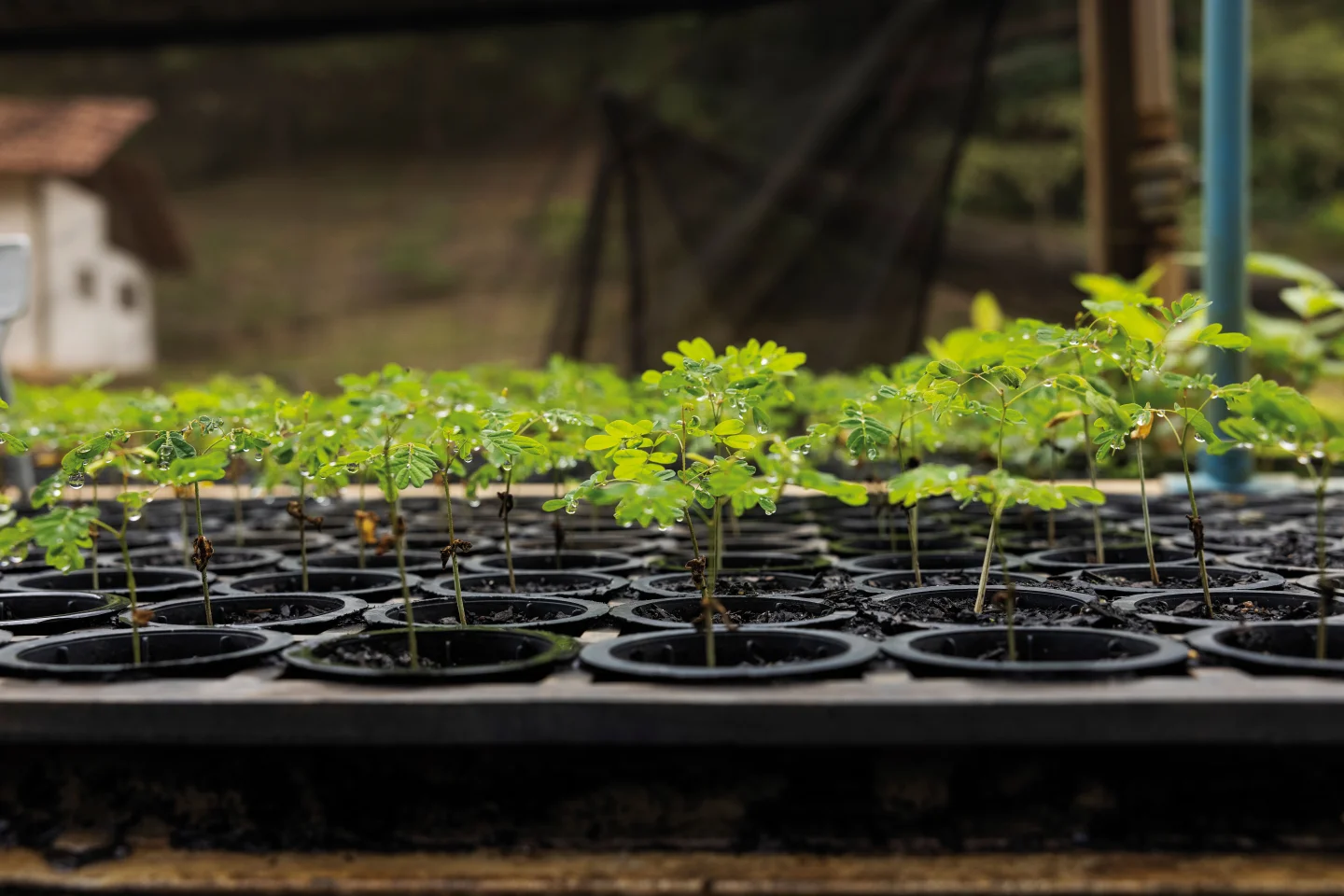
Green hope for a region: Growing millions of trees, a nursery is sending a signal to the world. Photo: Lalo de Almeida
Regrowing a forest can increase the wealth of communities. So how exactly do you go about doing that?
To most of us, trees are just trees. Their seeds germinate, and with luck, they put down roots in the soil. Eventually something sprouts on top, and then slowly but surely trees grow, and thrive.
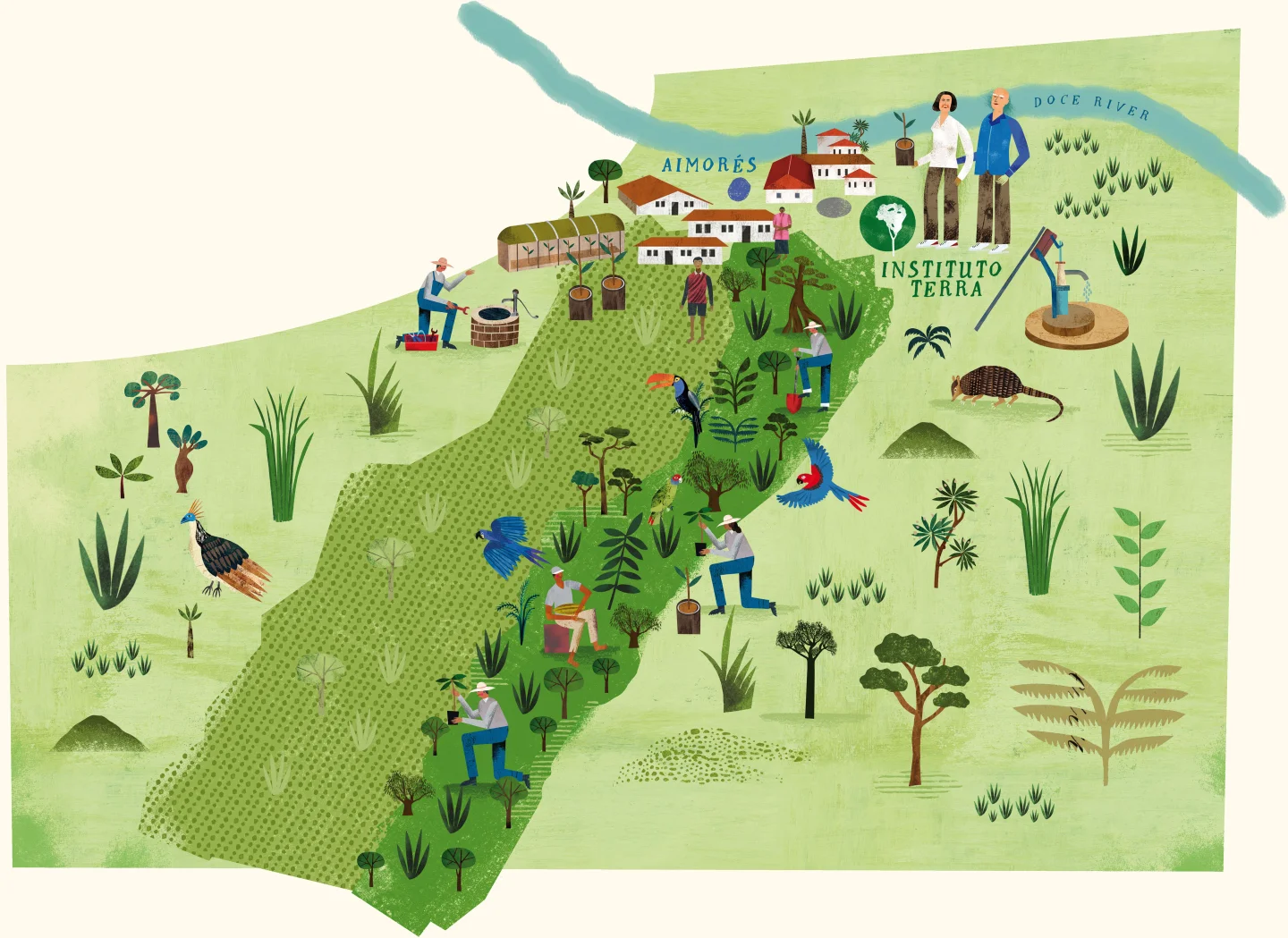
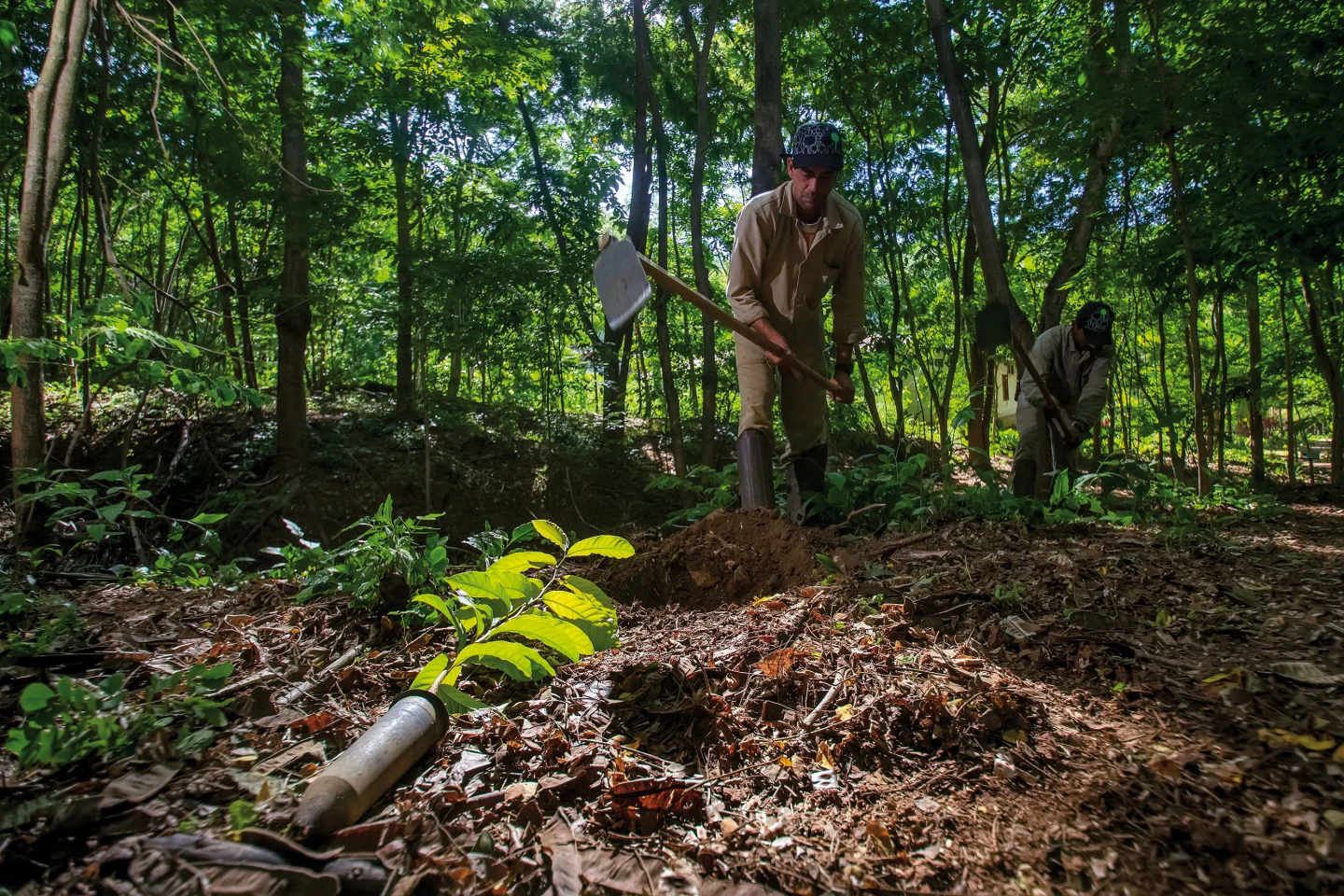
Trees, for the people of the town of Aimorés, where Instituto Terra is located, are a source of hope. Living in the Rio Doce Basin, they are proof that a land and its people can heal and thrive. A new sense of stewardship is springing up along with those trees in the Atlantic Forest, offering a glimpse of a better future on the land that once betrayed them.
Like many Brazilians living near their country’s eastern coast, their main sources of income were linked to land depletion like mining, mass production of crops, and the raising of cattle on non-indigenous grass species. But today, that same land is offering locals a potential alternative.
The story starts at Instituto Terra, where so far more than seven million seedlings have grown, for its own and other regrowth projects. They constitute well over 80 different native species and, thanks to support from Zurich, the non-profit organization has successfully built a new tree nursery, more than doubling its capacity for growing seedlings, while it has also roughly tripled the area it is regrowing, also thanks to Zurich’s support.
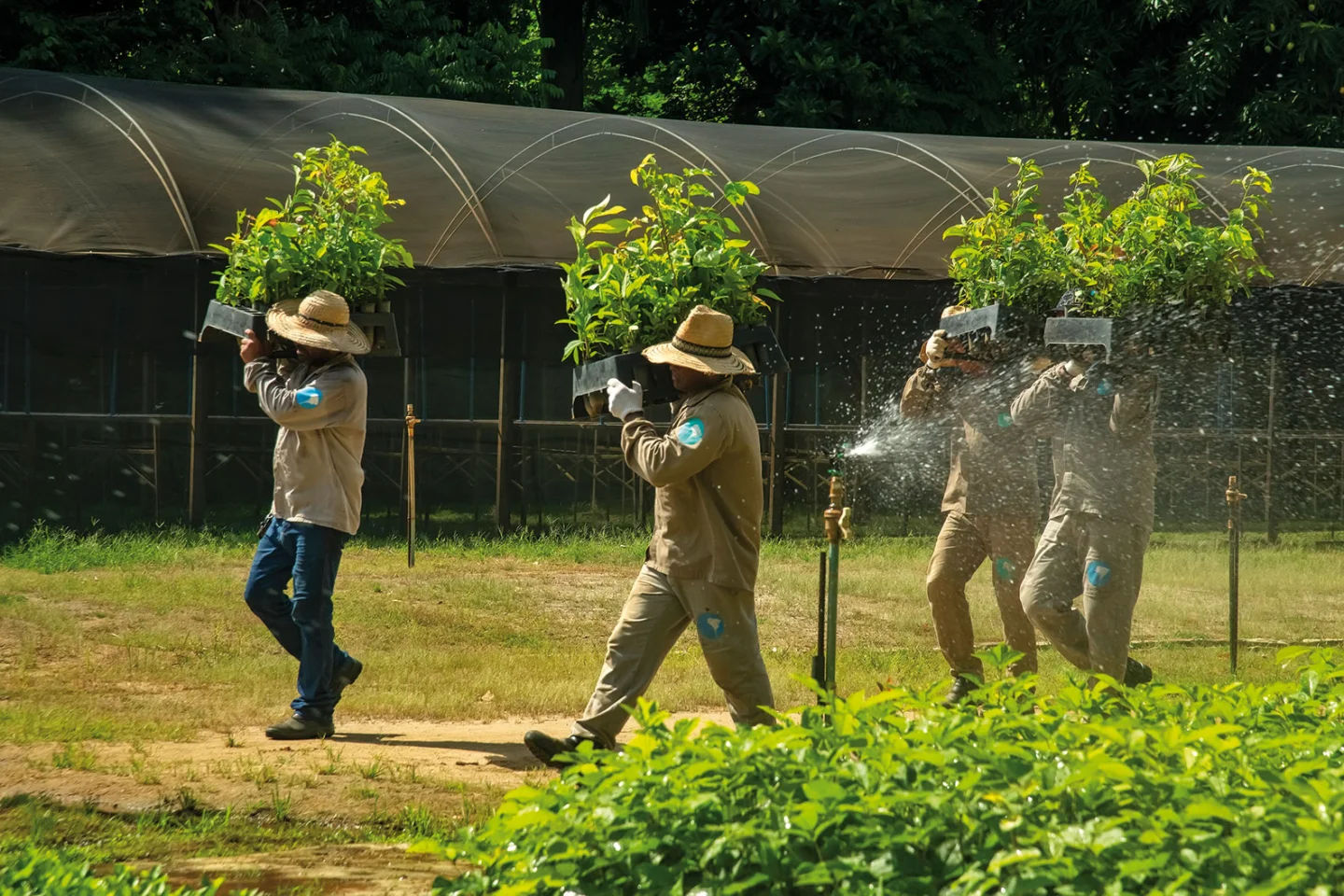
For Sebastião Salgado, growing trees required the same intense care that a parent would devote to raising children. Instituto Terra has learned to deliver this to regrow a part of the Atlantic Forest. Photo: Leonardo Merçon
This new nursery will allow Instituto Terra to initially produce up to one million native seedlings per year, along with providing trees to replenish its own 2,400 hectares of land. Reforestation’s benefits are manifold. It helps to convert pastures and monocultures into more sustainable, high-yield agricultural systems – and, in areas where soil formed by loose sediments is easily eroded, tree roots can keep it from washing away. Regrowing trees also helps keep water in the soil, and replenishes springs that are critical for efforts to restore sustainable agriculture.
Planting thousands of seedlings each year requires intense manual labor. But to better use its resources, with Zurich’s support, Instituto Terra has improved and automated some parts of its nursery operation, including watering and fertilization.
In 2023, Instituto Terra introduced an automated irrigation system, coupled with a ‘fertigation’ system that provides nutrients to young plants through water. A job usually carried out by eight individuals now requires only one person with an electronic tablet in hand. This automation provides a crucial watering advantage, especially when temperatures can easily soar to 40 degrees Celsius.
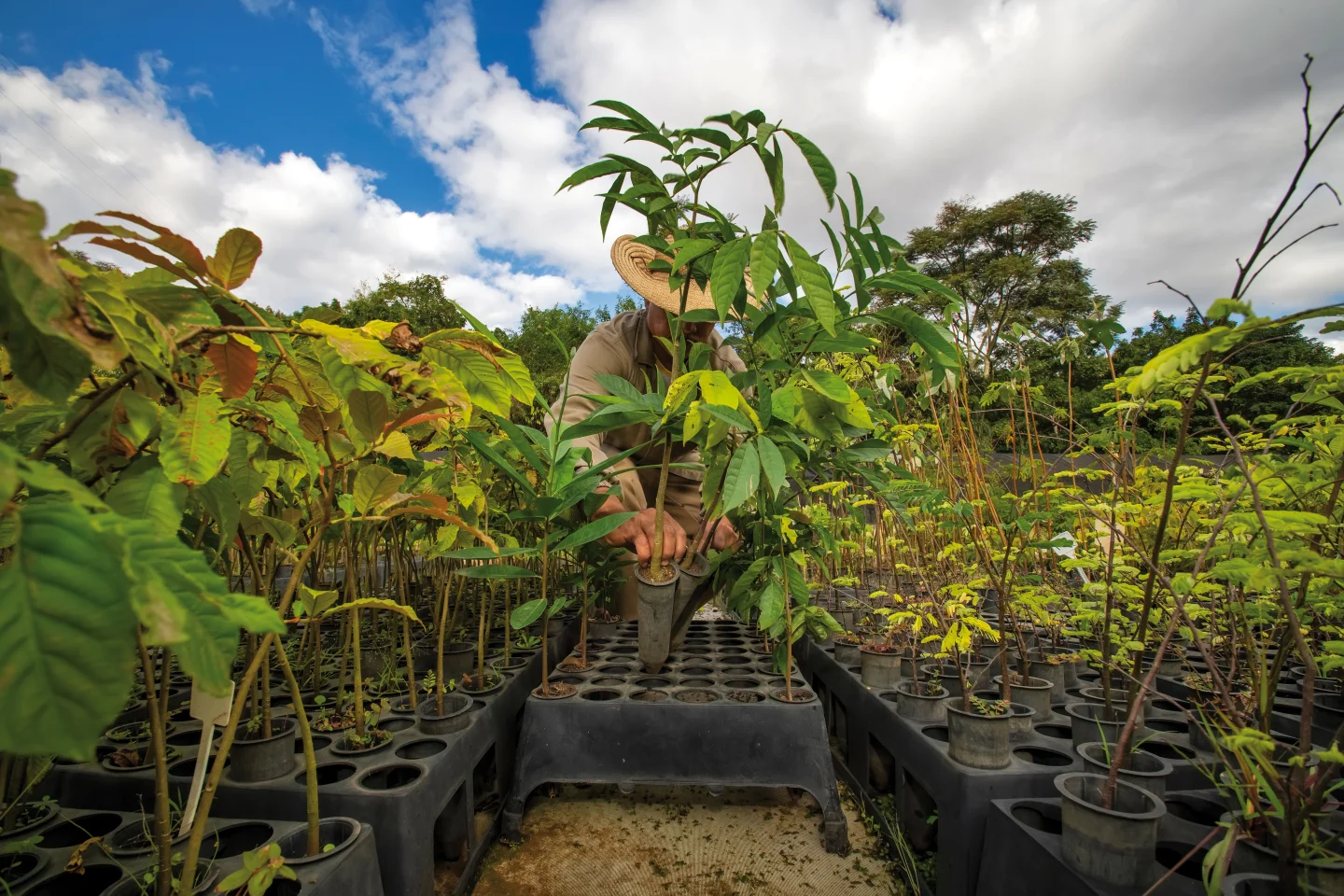
Nurturing rare, native species – each carefully chosen to restore the region’s natural balance. Photo: Leonardo Merçon
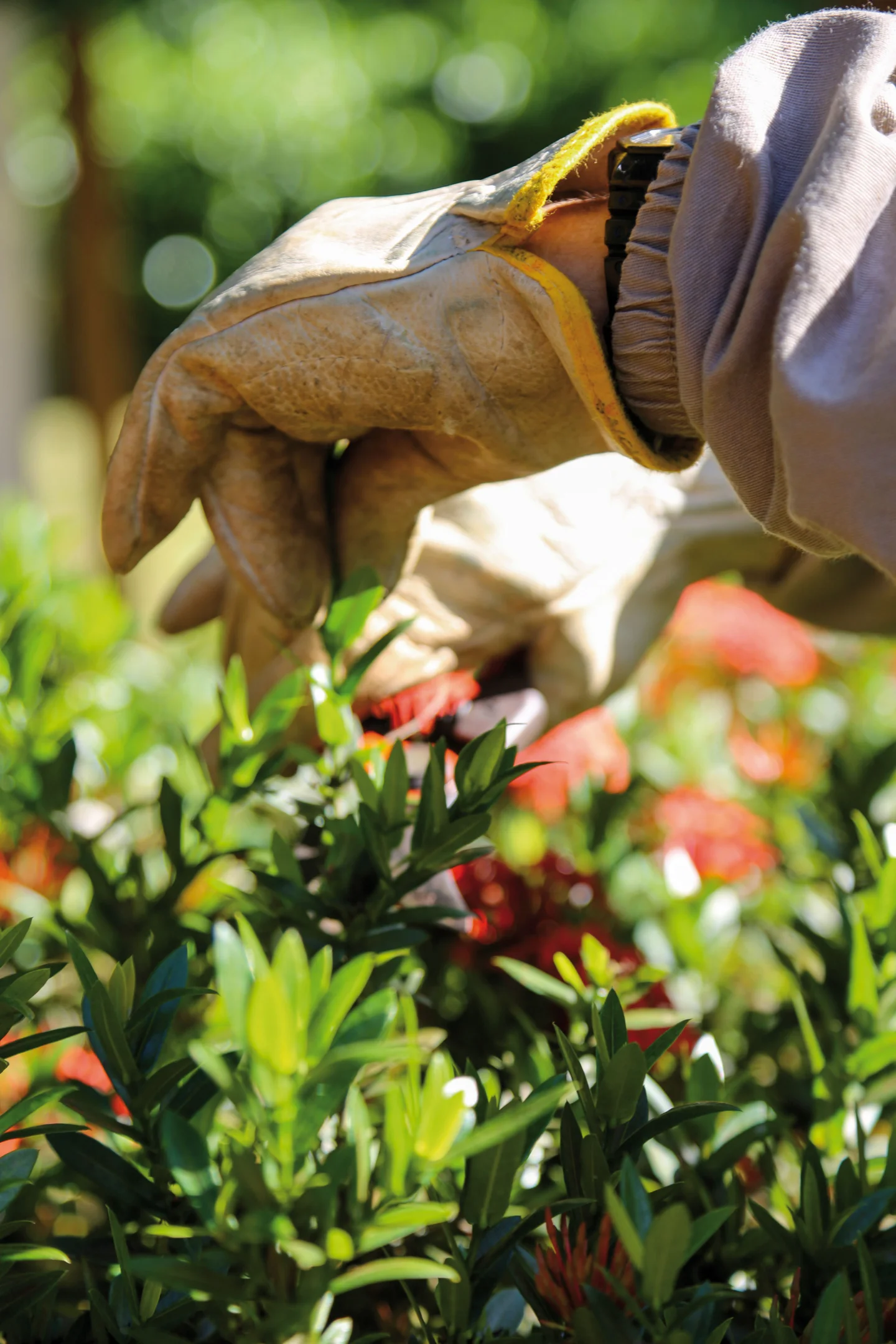
With the help of Zurich, Instituto Terra has built a new tree nursery. Photo: Philippe Petit
The nursery’s daily rhythm now revolves around precision and care. Trays move along sunlit benches as sensors monitor moisture levels, ensuring every seedling receives just what it needs. This meticulous attention translates into sturdier young trees that stand a better chance of thriving once transplanted, even under the heat of the dry season.
The nursery is also a center for practical improvement, where staff refine seedling care and adapt routines to boost field performance. Teams test adjustments such as different soil mixes, shade and watering regimes on small batches, learn what produces sturdier plants, then apply those practices at scale. These steady, evidence-led improvements raise survival rates, reduce waste and make each seedling more likely to take root and help renew degraded landscapes.
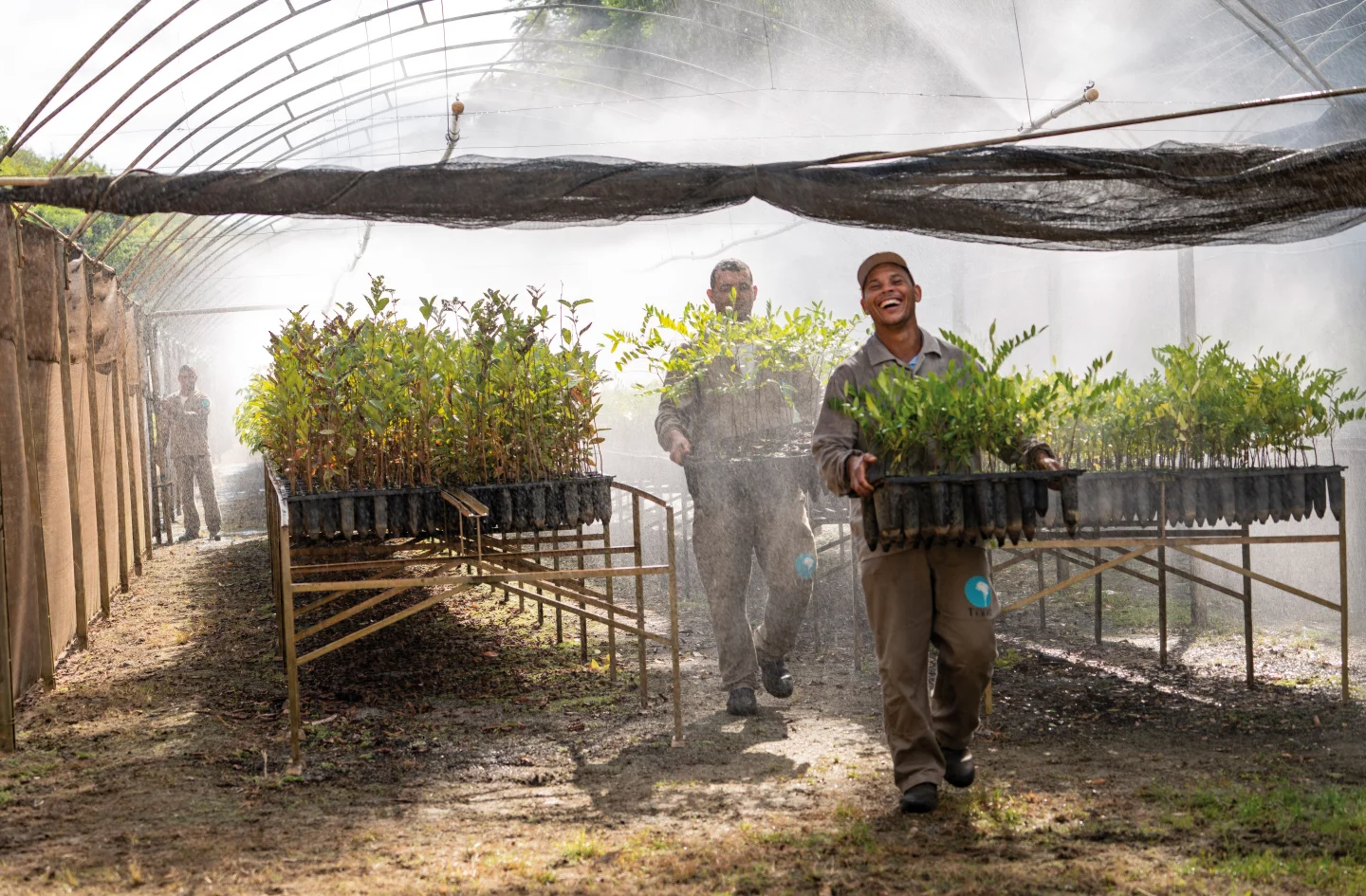
Signal of hope: Instituto Terra’s tree nursery is restoring life to the land. Photo: Philippe Petit
The Atlantic Forest originally stretched across roughly 1.3 million km², covering 15% of Brazil's territory. Today, approximately 94,000 km² remain.
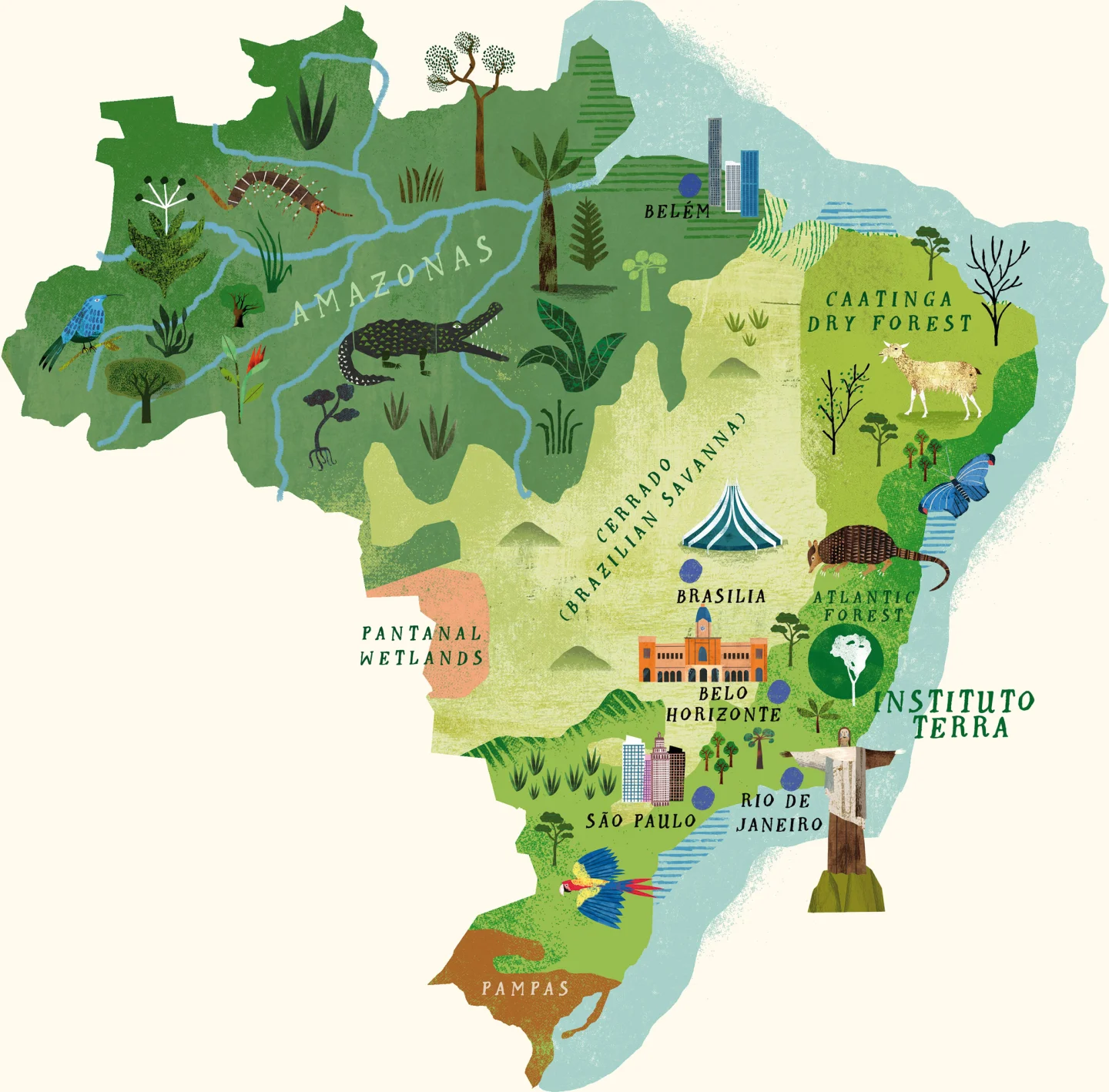
The Doce River Basin spans the states of Minas Gerais and Espírito Santo, serving as a vital water source and ecological corridor in southeastern Brazil.
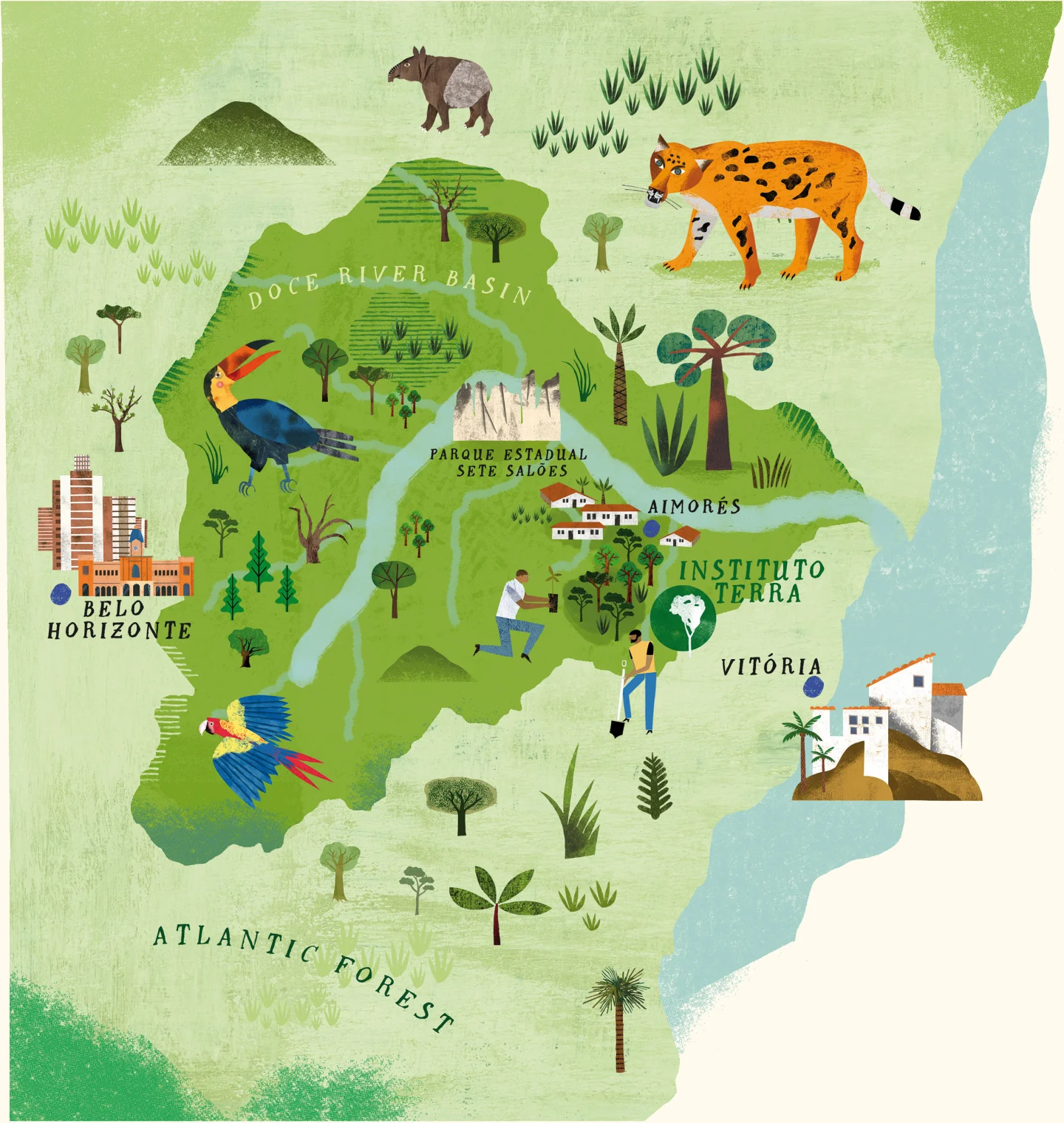
Instituto Terra began in 1998 with 700 hectares of degraded land and has grown to almost 2,400 hectares, now a thriving forest ecosystem.
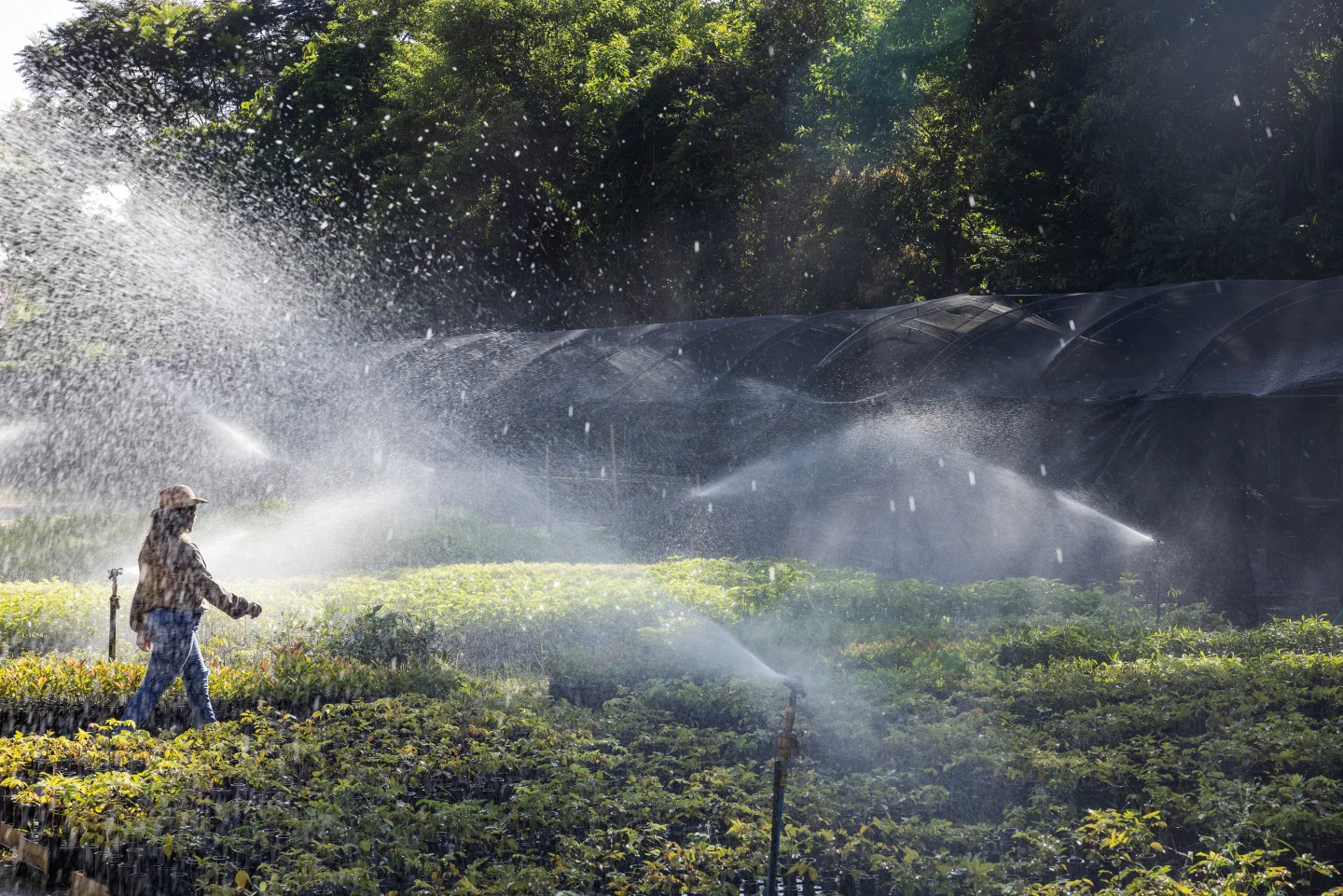
An automated irrigation system waters the seedlings. Photo: Lalo de Almeida
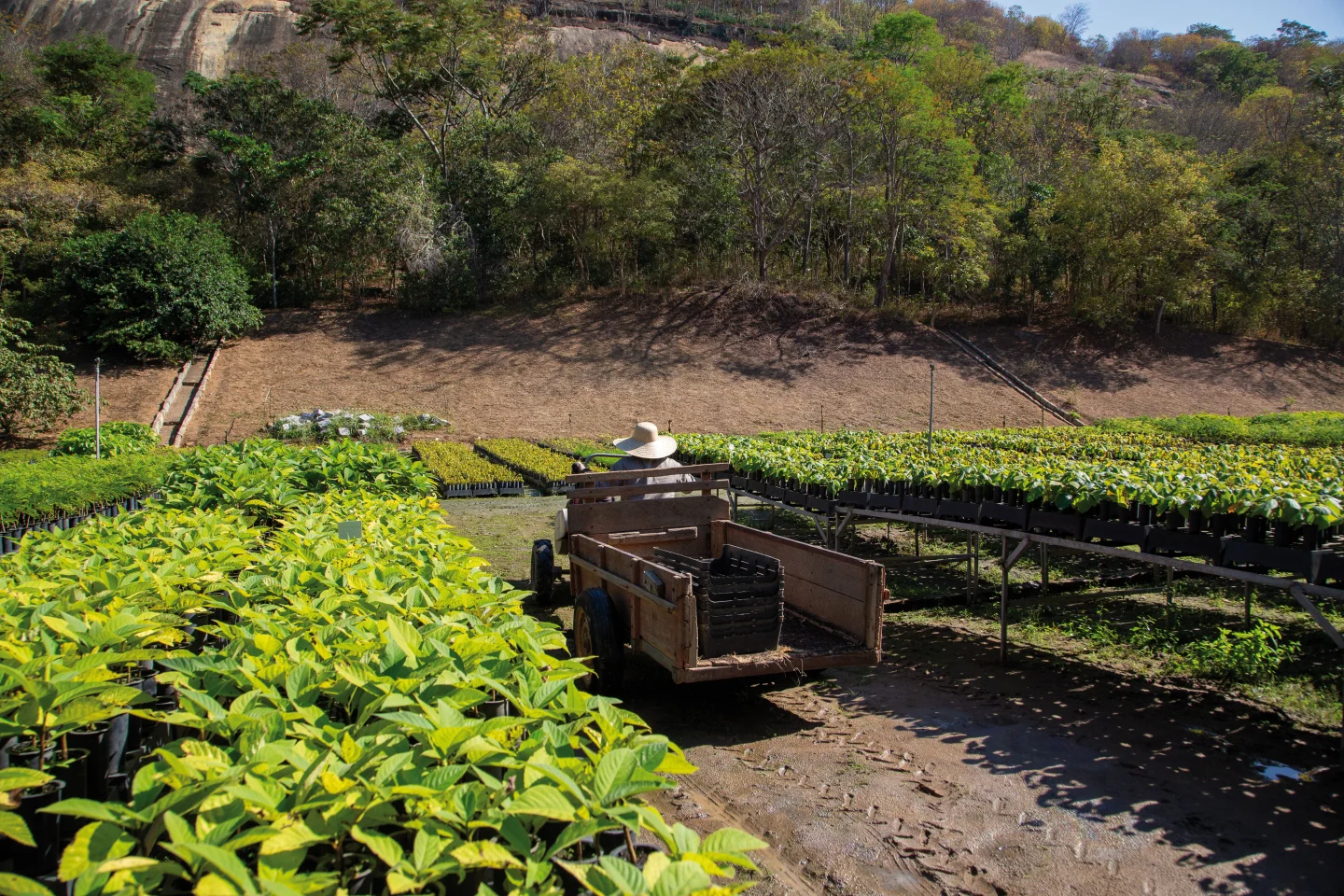
Beyond technology, the heart of the nursery remains people. Photo: Lalo de Almeida
Beyond technology, the heart of the nursery remains people. Local workers train the next generation of caretakers, passing on knowledge about native species, soil health, and watershed stewardship. Their hands, guided by patience and purpose, remind us that every seedling carries the promise of a future canopy that will strengthen not only the ecosystem, but the community’s resilience. Building on this hands-on expertise, Instituto Terra’s work also includes a seed bank program, begun in 2018 and focused on the most threatened tree species in the region. Its staff collects seeds for the nursery from trees within a radius of 200 km, including ones needed to regrow rare specimens. Once collected, the seeds undergo meticulous processing: they are cleaned to remove debris, sorted by species, and assessed for quality. Depending on their biological needs, some are refrigerated to simulate natural conditions that trigger germination, while others are stored in dry, climate-controlled environments to preserve viability. Among them are Instituto Terra’s trademark tree, the graceful yellow peroba (Paratecoma peroba). With its leafy green canopy, this species that was once threatened with extinction due to demand for its wood is now making a graceful comeback.
Instituto Terra is also making progress in lowering the environmental impact of its reforestation efforts. In the 2023 – 2024 planting season, the non-profit replaced its plastic seedling containers with biodegradable paper wraps. The paper promotes root development and, once the trees are planted, it decomposes. “With more vigorous seedlings, and no plastic waste, we can reforest degraded areas more efficiently,” says Marcella Fialho, a member of Instituto Terra’s team, who marvels that the nursery “runs like clockwork.”
Slowly but surely, Instituto Terra is sending a signal to the world that small miracles of regrowth and renewal can expand into far larger ones. “We wake up every day, come to work and make a choice to make the world better, to help it heal,” says Fialho. “If I had to choose one word to describe what I feel when I go to the nursery, it would be – hope.”
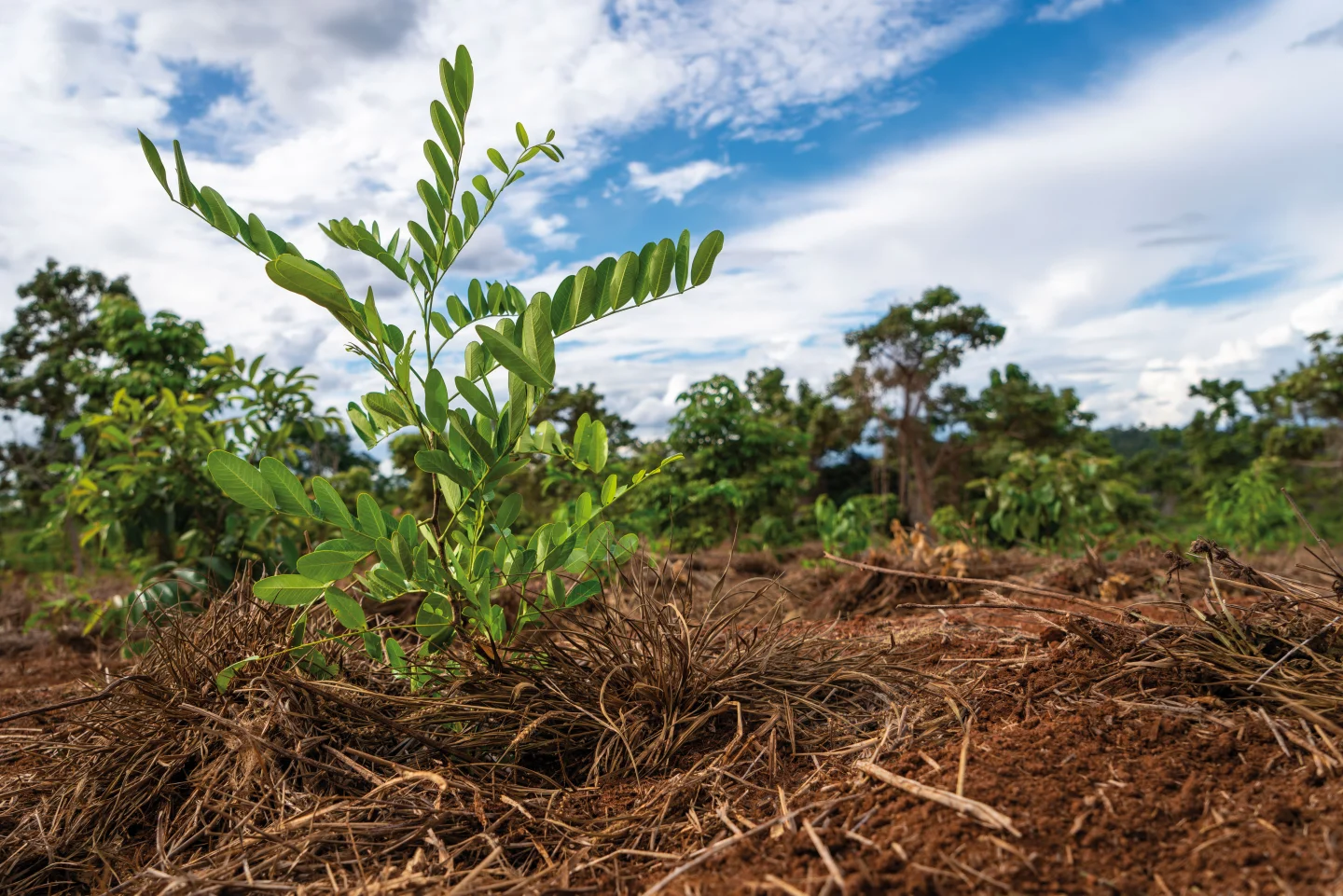
Instituto Terra’s planting initiative is considered a replicable model for ecological restoration worldwide. Photo: Lucas Barcelos
In a push for sustainability, the nursery has replaced plastic containers with biodegradable paper tubes that promote root growth. Photo: Leonardo Merçon

ZURICH INSURANCE GROUP
Alessio Vinci, Group Chief Communications Officer
Anja Heinsdorf, Project Lead
Published in November 2025
Panda & Pinguin GmbH
Andrea Bleicher
Studio Sturzenegger GmbH
Jürg Sturzenegger
Alice Ratcliffe
Heike Anja Mittmann
group.communications@zurich.com
Zurich Insurance Group
Group Communications
Mythenquai 2
8002 Zurich, Switzerland
This publication has been produced by Zurich Insurance Group Ltd solely for informational purposes. All information contained in this publication have been compiled and obtained from sources believed to be reliable and credible but no representation or warranty, express or implied, is made by Zurich Insurance Group Ltd or any of its subsidiaries as to their accuracy or completeness. No reliance should be placed on any statements contained in this publication. Neither Zurich Insurance Group Ltd nor any of its subsidiaries accept liability for any loss arising from the use or distribution of or reliance upon this publication.
This publication may not be distributed or reproduced either in whole, or in part, without prior written permission of Zurich Insurance Group Ltd, Mythenquai 2, 8002 Zurich, Switzerland.