Menu
Sebastião Salgado (1944 ‑ 2025)
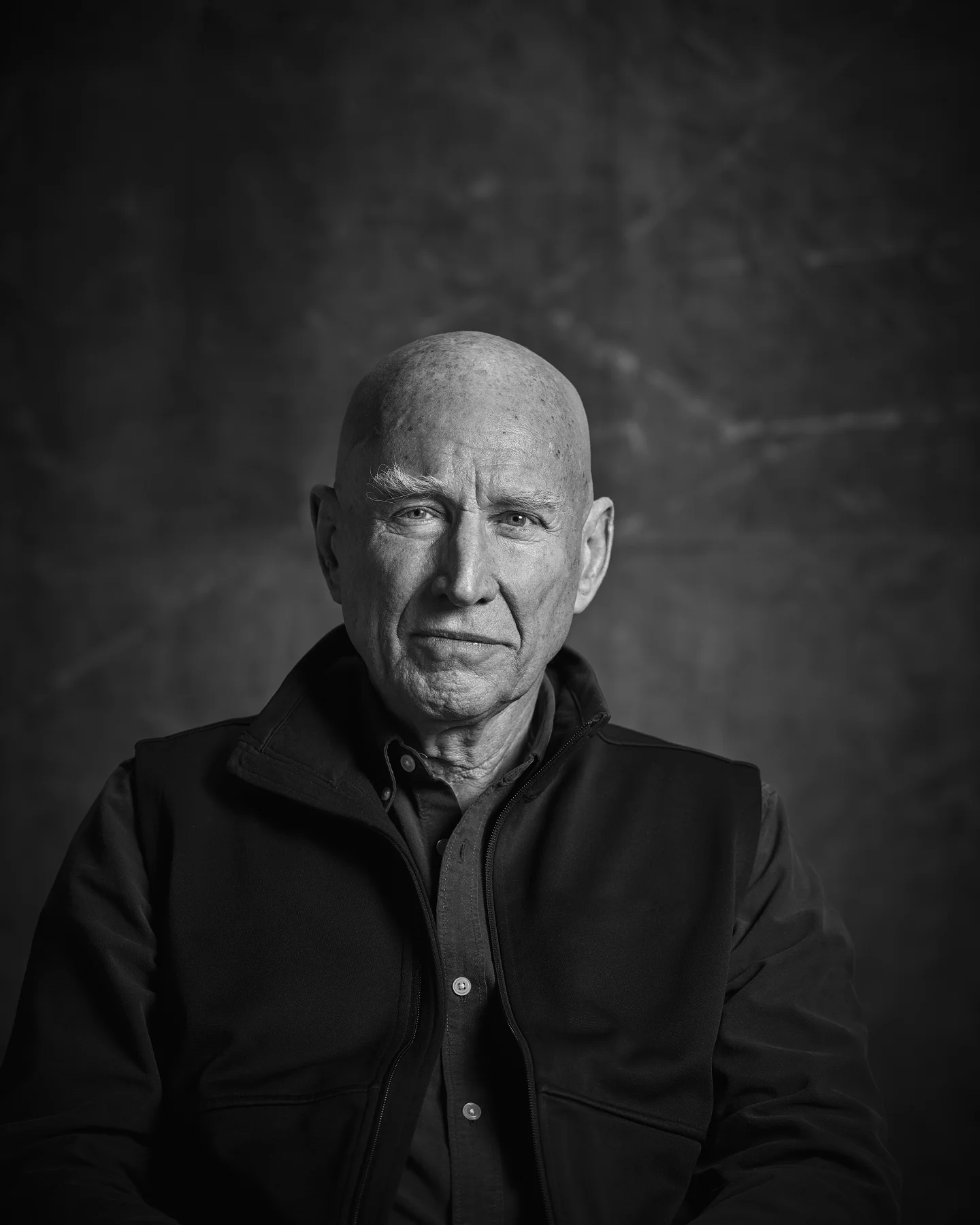
Photo: Renato Amoroso
Sebastião Salgado’s photos are sweeping in time, scale and scope. They spring from fears, social injustice, and hopes for renewal. A forest gave him his initial vision.
“Here I learnt to see and love the different light that has followed me all my life.” So described Sebastião Salgado the inspiration for his photographic works, springing from what he saw as a boy growing up in the Rio Doce Valley. When he returned to the place decades later, it again offered inspiration. This time, instead of photos, it suggested, first in a faint way, then with strong affirmation, that it is possible to restore a forest.
To see the landscape that inspired the photographer, as it had become – barren and depleted – must have been painful. It took courage to bring it back to life. And, more importantly, to keep it going. It’s a vision that is still very much alive. Because, as Lélia and Sebastião have learned from their work restoring the forest, you cannot quit. Once you’ve started, you are committed. Regrowing even a tiny part of what once was one of the world’s greatest biomes demands parental dedication. In Salgado’s own words, “to raise a tree is as to raise a child.”
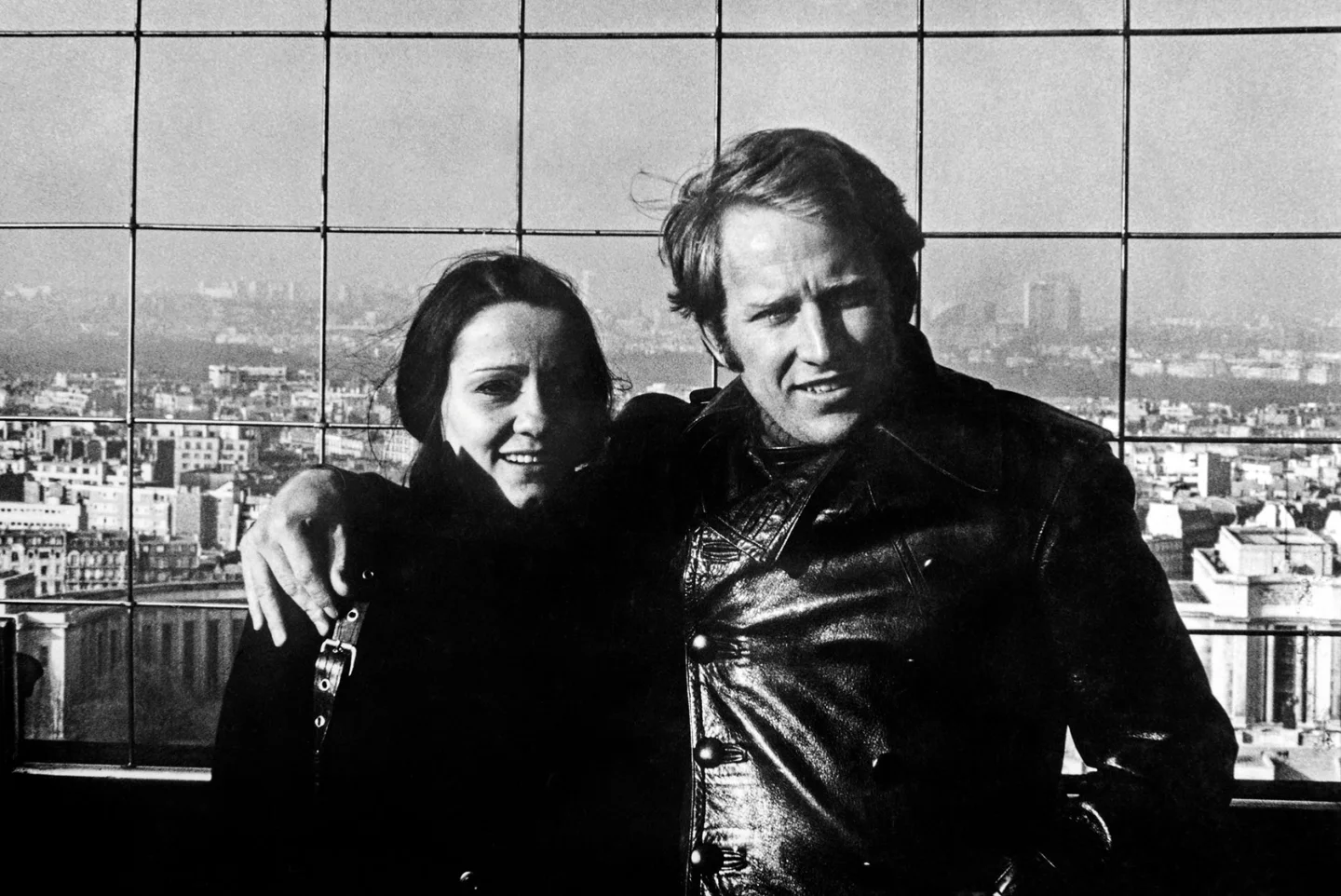
Lélia Wanick Salgado and Sebastião Salgado in Paris, 1971. Photo: Studio Salgado
That’s a job that demands time, patience, and love – ongoing, over decades, while thinking ahead for the generations to come. A long-term aspiration beyond just a few years. And one that Zurich is proud to support. The Salgados’ vision has been to restore some kind of harmony and balance to our interactions with nature. Their message is that humans and nature must coexist. “What is essential is to understand our place on Earth,” says Lélia. “We are necessary to the planet, but only if we share it with other species in harmony. We cannot be the emperors of the world.”
Among the couple’s lifelong masterpieces, Instituto Terra, the idea of Lélia Wanick Salgado, stands out. Her determination together with Sebastião’s imposing presence, tall and lanky, with a piercing gaze, created an intensity hard to ignore. Their ideas proved capable of inspiring a contagious passion in others.
That includes at Zurich. While it might be hard to imagine a roomful of top executives gathering for an annual leadership meeting getting worked up about forest depletion, in fact, that is exactly what happened. Zurich, impressed by what the Salgados had achieved, invited Sebastião to their leadership team meeting in Madrid in 2019, where he spoke on stage. Videos from the day show the enthusiasm of the audience. Zurich saw parallels between the Salgados’ worldview and its own. In 2020, Zurich announced the Zurich Forest Project, with the aim of planting one million seedlings on a tract of Instituto Terra’s land. To allow it to expand its area, Zurich has also supported Instituto Terra’s acquisition of neighboring land, roughly tripling the original size.
Bringing back a forest isn’t easy. Mechanization of farming, monocrops, and the influx of non-native species have depleted much of the land and all that lives on it in what was once the Atlantic Forest. Juliano Salgado recalls that when they started working, it was difficult to walk on the dry ground under the sun, in relentless heat.
Where once a myriad of natural springs flowed, dust blew over dry soil. Erosion, land misuse, and a failure to adopt any conservation methods meant the earth had literally died. Over the past 500 years, the once vast biome, which stretched in a single sweep along the Atlantic coast of what is now Brazil, inland as far as Uruguay and Argentina, has almost disappeared – only 12.4 percent of the original forest remains today.
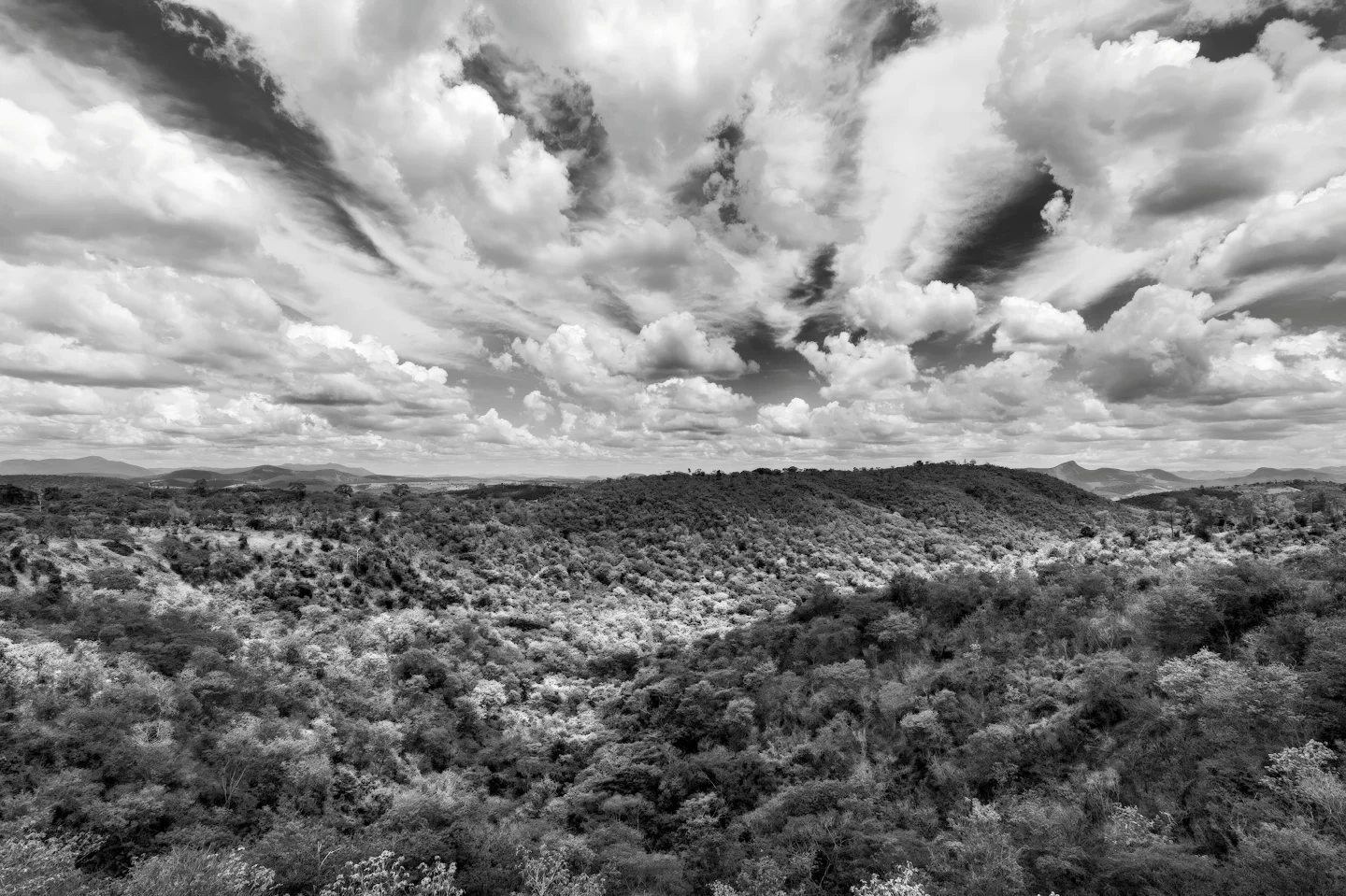
Nature reclaiming its beauty, 2023. Photo: Studio Salgado
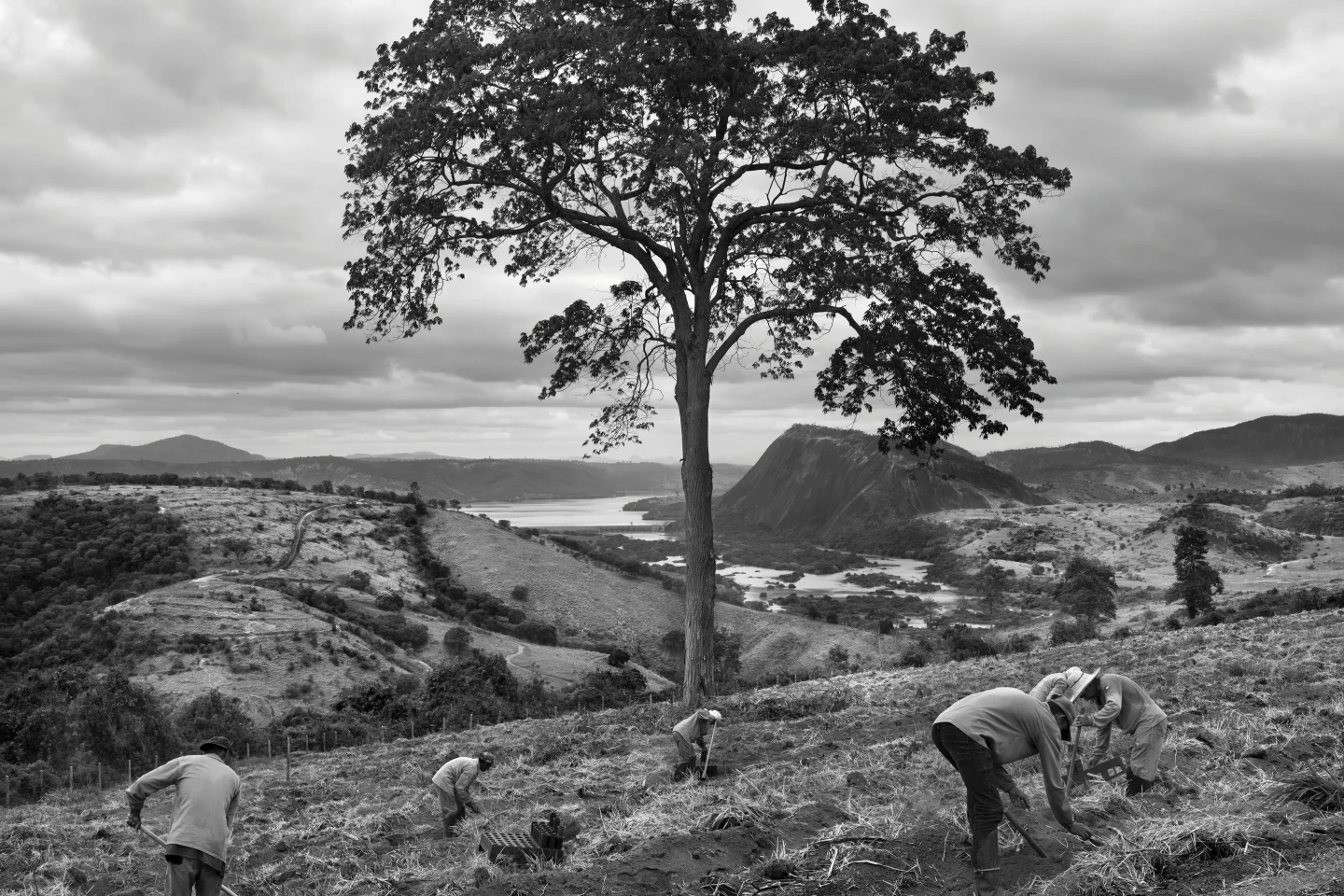
Planting new trees, 2023. Photo: Studio Salgado
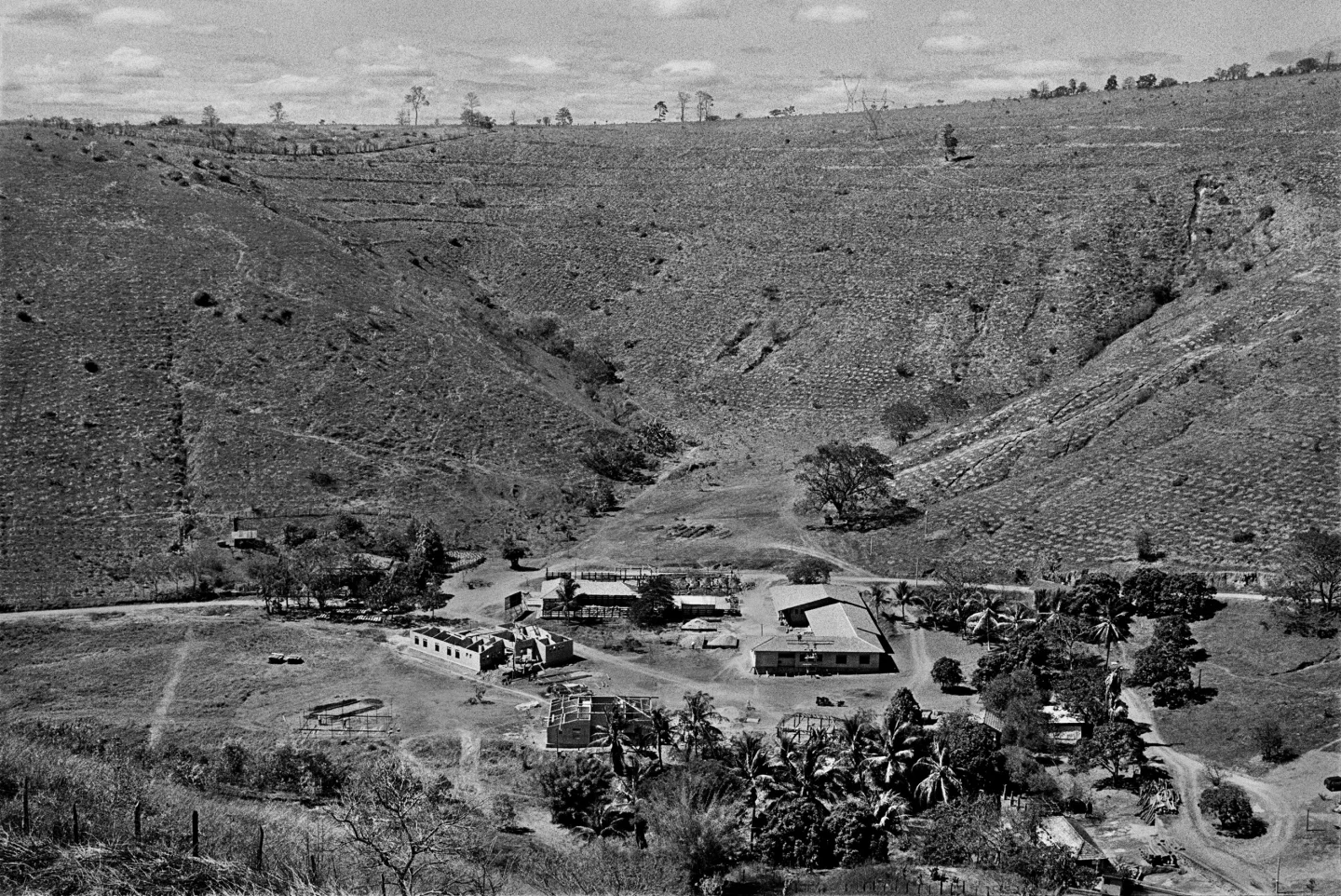
The land owned by Instituto Terra before reforestation, 2001, and after, 2022. Photo: Studio Salgado
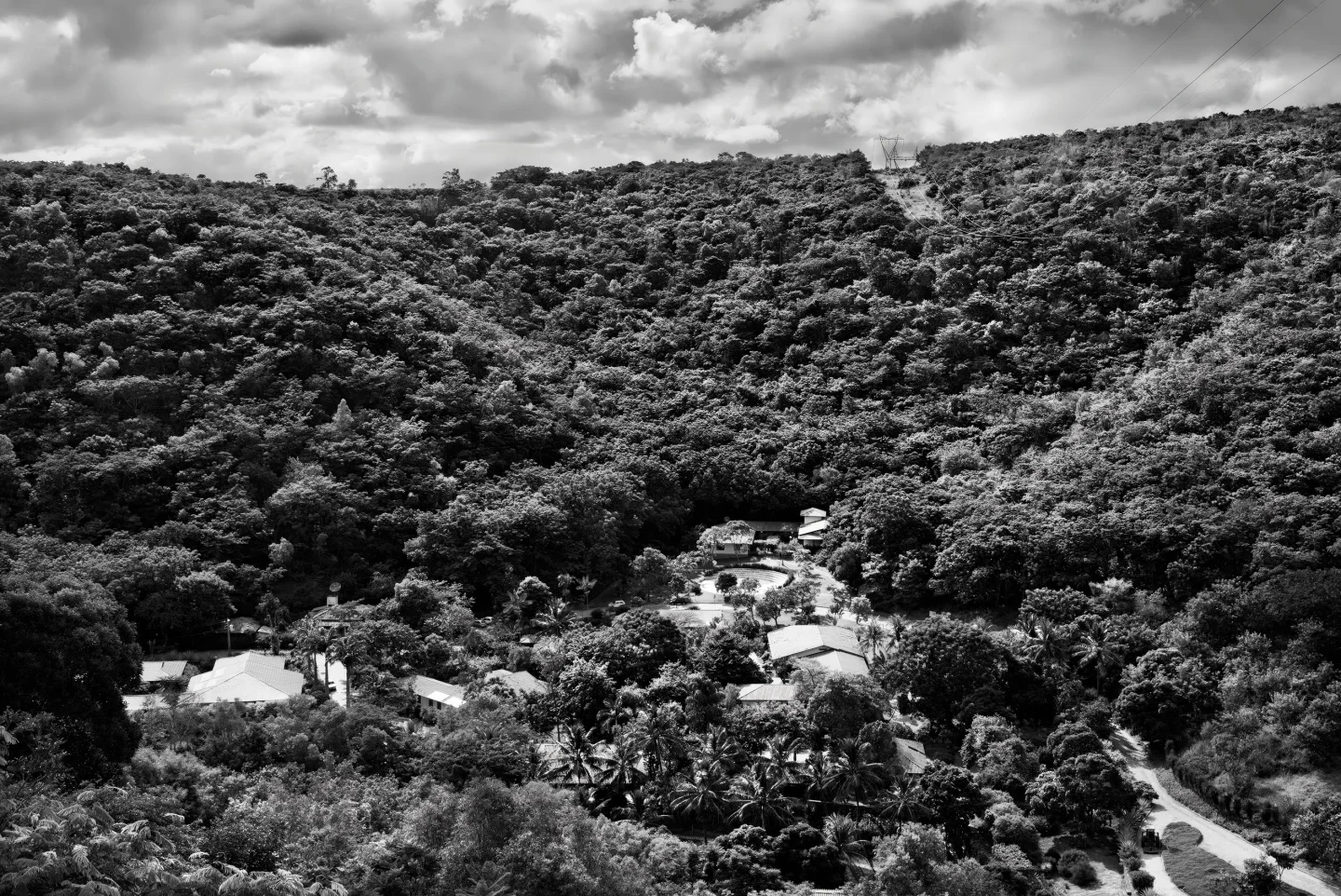
The land owned by Instituto Terra before reforestation, 2001, and after, 2022. Photo: Studio Salgado
Yet, despite all odds, today Instituto Terra is flourishing. This has been achieved through hard work, and with the help of outside donors and sponsors. The region where it is situated, on the old family farm, is part of the Southeast Atlantic hydrographic region that drains water over an area nearly as big as Portugal. Bisected by the Doce River, the main artery flows for over 500 km (300 miles) to the Atlantic Ocean. Near the town of Aimorés, in the state of Minas Gerais, restoring the forest has provided the basis for an entire community to reclaim its spirit.
As a photographer, Sebastião Salgado always tried to show people in all their dignity. He felt it his duty to record what was happening – a “moral, ethical obligation” to take photos, also of war and famine. In 2004, refreshed in spirit, he began the ‘Genesis’ project, photographing animals and landscapes: glaciers in Antarctica, deserts in the Sahara, the Galápagos Islands, parts of Asia. He journeyed to Canada and Alaska, and throughout South America. “After having witnessed so much horror, I was now seeing so much beauty,” he recalled.
In a similar way, transformation happens at Instituto Terra. It is expanding its nursery, adopting more mechanization, and planning to increase its education programs. The changeover to the next generation includes regrowing whole communities. Once skeptical of Instituto Terra, farmers who routinely used fire to regrow grass for grazing pastures, are starting to see the value of trees. Juliano Salgado, who has taken over as President of Instituto Terra, believes that local farmers are learning that they have a lot more to win by planting trees, rather than by cutting them down.
With Sebastião’s death, his ashes were placed at the roots of a young tree at Instituto Terra so that its trunk, branches, and leaves can grow with his strength and love for nature. He has come to rest in what might be the famous photographer’s greatest achievement: the replanted forest.
The work will continue. And, as part of it, the lesson of responsibility remains. Throughout his career, Salgado learned the importance of waiting for the right moment. “Taking a photograph… you have to be patient and wait for something to happen. Because, inevitably, something will happen.”
The same could be said of a forest – patience, the kind needed to raise a child, a willingness to allow things to happen in their own time. This is the legacy that Sebastião leaves: the future of the forest is a tangible, living project. We are all stewards of its success.
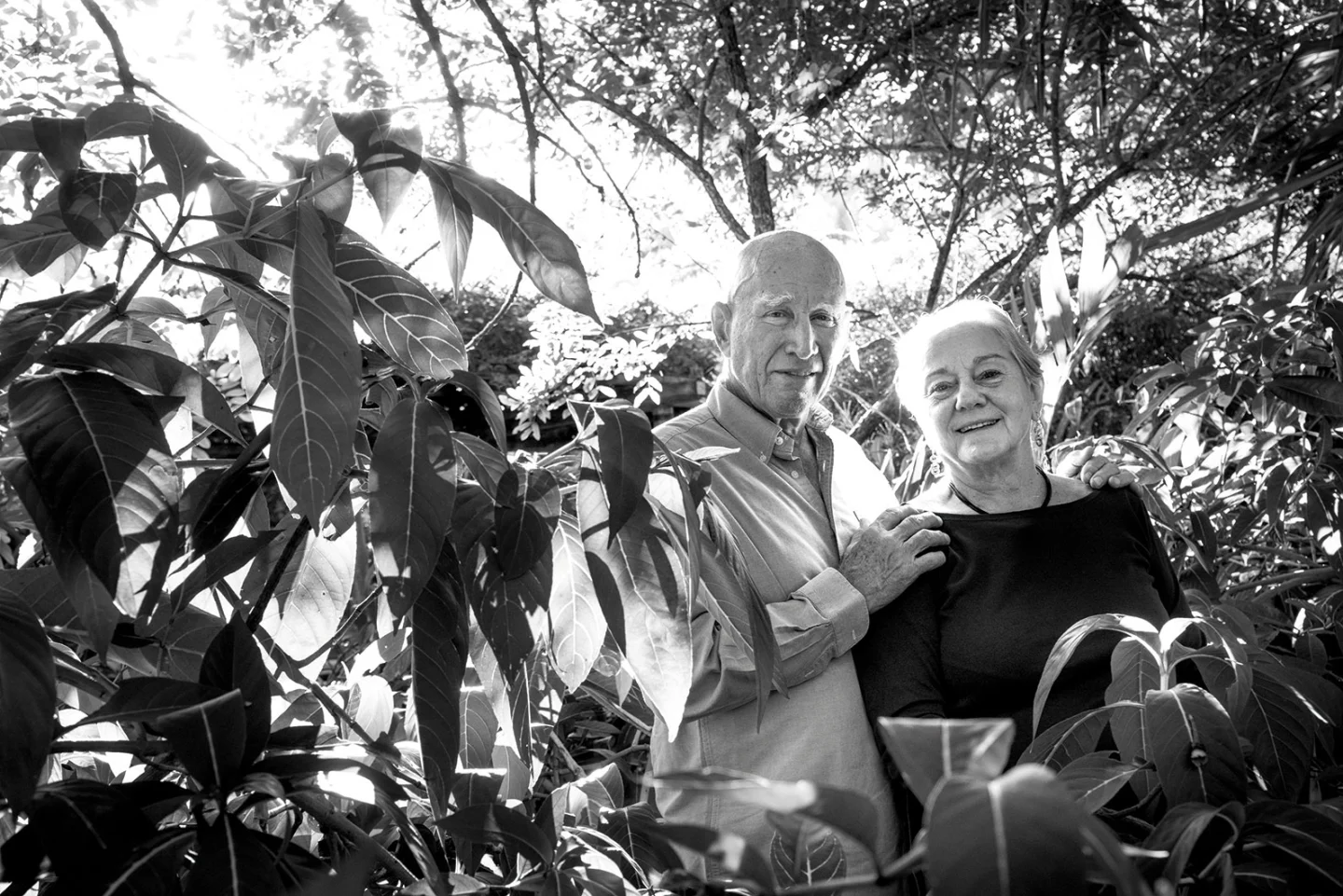
Instituto Terra’s founders: Lélia Wanick Salgado and Sebastião Salgado, 2019. Photo: Philippe Petit
ZURICH INSURANCE GROUP
Alessio Vinci, Group Chief Communications Officer
Anja Heinsdorf, Project Lead
Published in November 2025
Panda & Pinguin GmbH
Andrea Bleicher
Studio Sturzenegger GmbH
Jürg Sturzenegger
Alice Ratcliffe
Heike Anja Mittmann
group.communications@zurich.com
Zurich Insurance Group
Group Communications
Mythenquai 2
8002 Zurich, Switzerland
This publication has been produced by Zurich Insurance Group Ltd solely for informational purposes. All information contained in this publication have been compiled and obtained from sources believed to be reliable and credible but no representation or warranty, express or implied, is made by Zurich Insurance Group Ltd or any of its subsidiaries as to their accuracy or completeness. No reliance should be placed on any statements contained in this publication. Neither Zurich Insurance Group Ltd nor any of its subsidiaries accept liability for any loss arising from the use or distribution of or reliance upon this publication.
This publication may not be distributed or reproduced either in whole, or in part, without prior written permission of Zurich Insurance Group Ltd, Mythenquai 2, 8002 Zurich, Switzerland.