Menu
Furry, shiny, scaly, fuzzy. Creatures of all kinds have returned to the recovering forest.
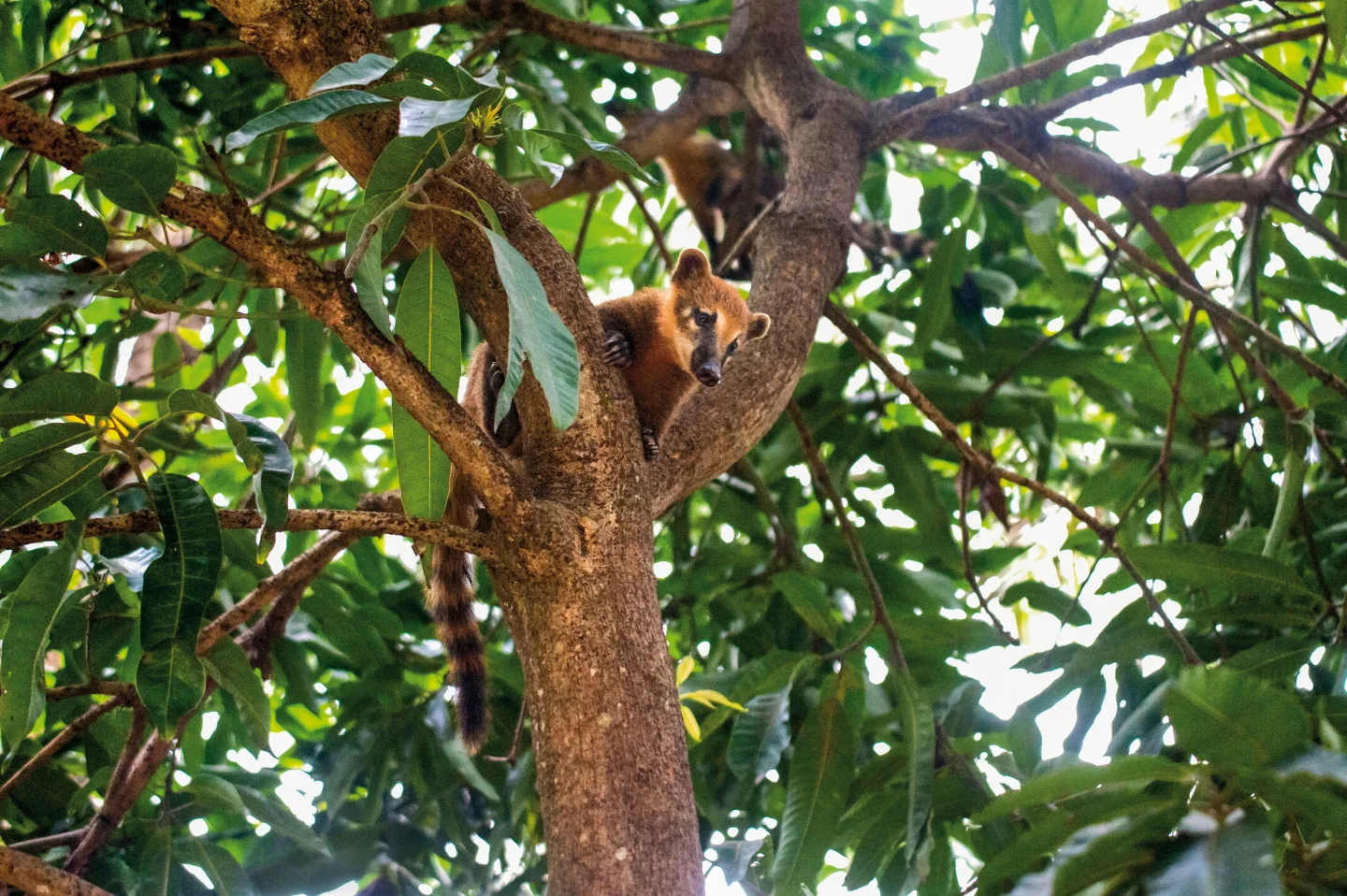
Back for good: The insect-eating, tree-climbing coati (Nasua nasua) have returned. Photo: Leonardo Merçon
Visiting Instituto Terra you might hear what seems to be a dog barking in the trees. It is the call of a red-browed parrot (Amazona rhodocorytha). Along with other native birds, it has found a home in the recovering forest, one of 173 species of birds, 33 species of mammals, 15 species of amphibians, and 16 species of reptiles to return. A variety of creatures, large, small, furry, shiny, scaly, fuzzy, feathery, or slimy have come back. That includes lowland tapirs (Tapirus terrestris), valued due to their propensity to wander, defecating seeds as they go, spreading plant diversity. Smaller creatures like the Hay’s snouted treefrog (Scinax fuscovarius), a freshwater amphibian, venture out at night. The ocelots (Leopardus pardalis) are shy and rare. Some seem a little odd, like the collared lesser anteater (Tamandua tetradactyla), whose patterned coat gives it the appearance of wearing a fur onesie. For all native species, a regrown forest offers a chance to regain a lost habitat.
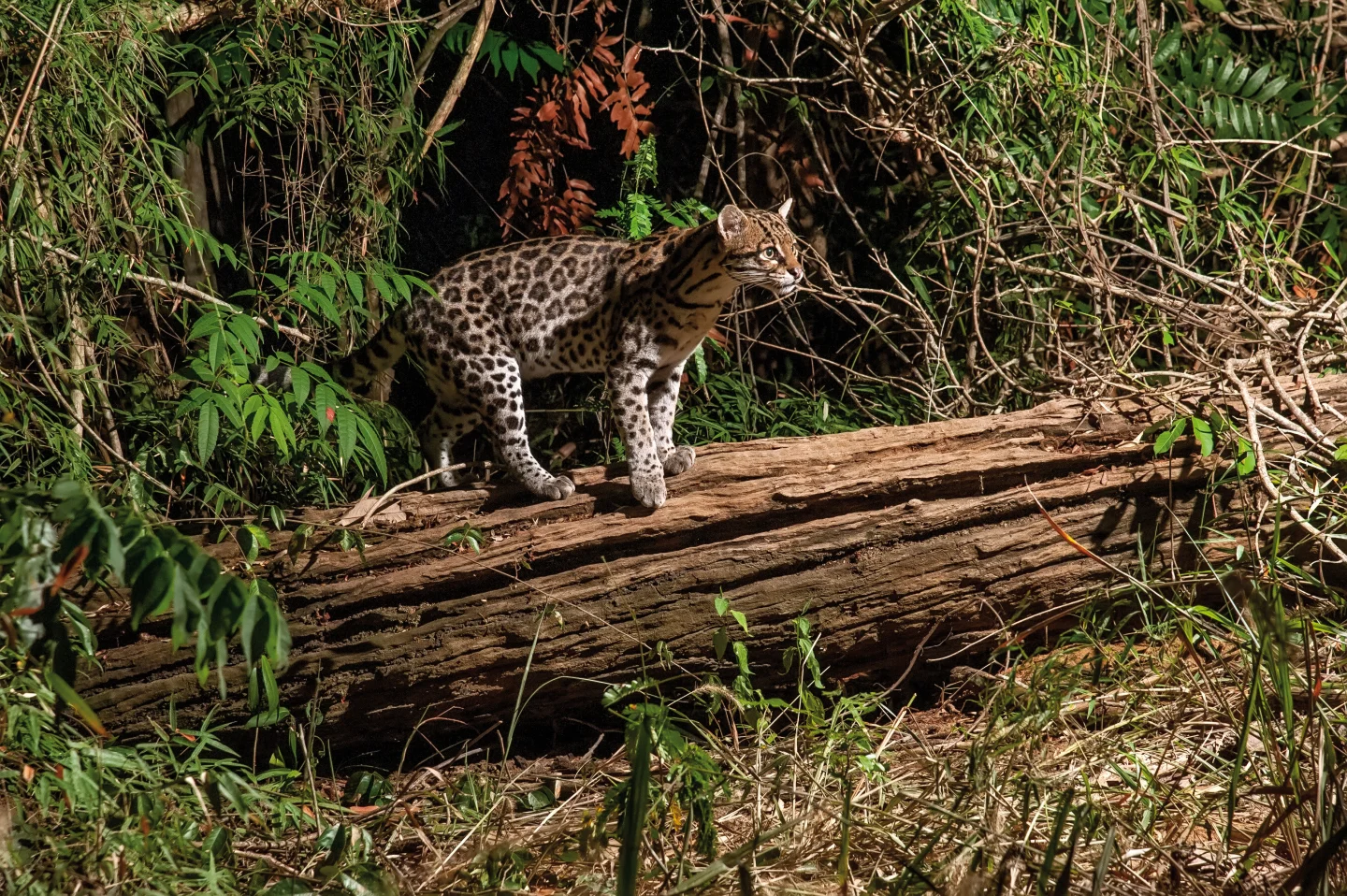
Ocelots (Leopardus pardalis) are largely nocturnal. Photo: Leonardo Merçon
Once greenery was restored to the eroded areas, animals began returning. Each year, the habitat becomes more attractive to new, legitimate residents.


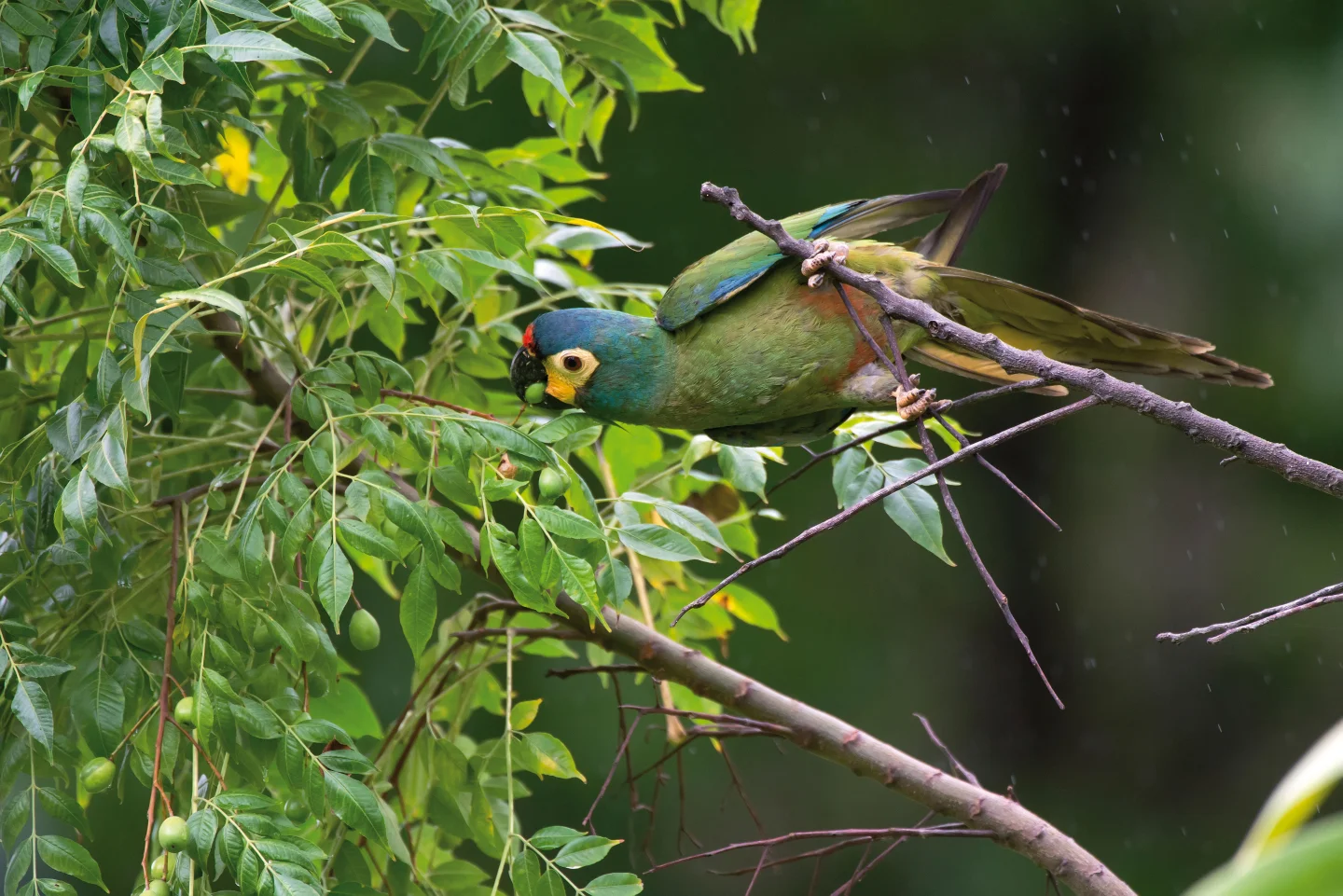
The red-browed parrot (Amazona rhodocorytha) has a bark-like call. Photo: Leonardo Merçon
In particular, the return of one species has special meaning. The critically endangered jaguar (Panthera onca), the largest animal in this ecosystem’s food chain, has come back to the forest. It means that an alpha predator has sufficient prey, indicating that the balance of native species is working in harmony with nature. Another predator, the maned wolf (Chrysocyon brachyurus) has returned as well. Regenerating a portion of what was once a contiguous forest gives it more room to roam, increasing the chance for more breeding diversity. Its diet includes the nine-banded armadillo (Dasypus novemcinctus), also at home in the forest.
Among the more unusual forest dwellers, the crab-eating raccoon (Procyon cancrivorus) has made the reclaimed forest land its home, too. As the name suggests, it is fond of crabs found in inland rivers, and prefers to avoid humans. Thanks to reforestation around Instituto Terra, it can also indulge in its favorite pastime – climbing trees.
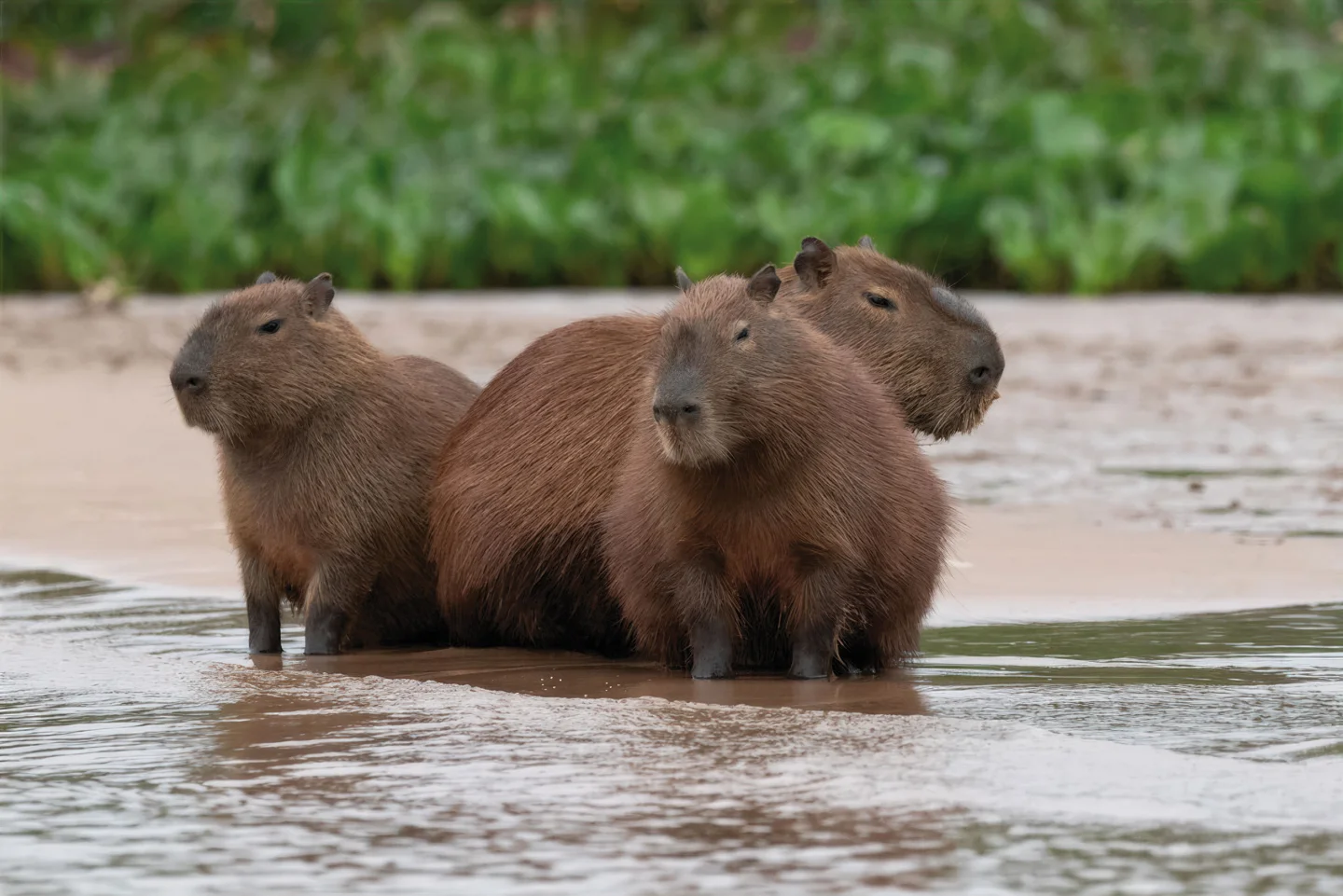
Capybaras (Hydrochoerus hydrochaeris) lead a semi-aquatic lifestyle Photo: Leonardo Merçon
ZURICH INSURANCE GROUP
Alessio Vinci, Group Chief Communications Officer
Anja Heinsdorf, Project Lead
Published in November 2025
Panda & Pinguin GmbH
Andrea Bleicher
Studio Sturzenegger GmbH
Jürg Sturzenegger
Alice Ratcliffe
Heike Anja Mittmann
group.communications@zurich.com
Zurich Insurance Group
Group Communications
Mythenquai 2
8002 Zurich, Switzerland
This publication has been produced by Zurich Insurance Group Ltd solely for informational purposes. All information contained in this publication have been compiled and obtained from sources believed to be reliable and credible but no representation or warranty, express or implied, is made by Zurich Insurance Group Ltd or any of its subsidiaries as to their accuracy or completeness. No reliance should be placed on any statements contained in this publication. Neither Zurich Insurance Group Ltd nor any of its subsidiaries accept liability for any loss arising from the use or distribution of or reliance upon this publication.
This publication may not be distributed or reproduced either in whole, or in part, without prior written permission of Zurich Insurance Group Ltd, Mythenquai 2, 8002 Zurich, Switzerland.